AI Email Personalisation for Retail Lead Nurturing: Transform Customer Engagement
Transform your retail email campaigns with AI personalisation. Discover strategies, tools, and techniques to nurture leads effectively and boost conversions.
Contents
Retail customers expect emails that feel personal, not automated blasts that land in everyone’s inbox at precisely 9 AM. Yet most small retailers still send the same newsletter to their entire list, wondering why open rates hover around 15% and sales remain flat. Platforms for small retailers typically run $60 to $600 a month, depending on list size and features.
The gap between customer expectations and reality creates a genuine opportunity. Email personalisation using artificial intelligence isn’t just about inserting someone’s first name into a subject line. Done properly, it transforms casual browsers into committed buyers by delivering relevant content at precisely the right moment.
Manual personalisation becomes impossible once a small retailer passes 500 subscribers. You simply cannot remember who looked at winter coats last month or which customers prefer evening emails over morning ones. This is where AI steps in, not to replace human judgement, but to handle the data processing that humans cannot scale.
Understanding Email Personalisation Beyond Names
True email personalisation goes far deeper than “Hello Sarah” subject lines. It involves analysing customer behaviour, purchase history, browsing patterns, and engagement timing to create genuinely relevant communications.
Research suggests that retailers using advanced personalisation techniques see higher email conversion rates compared with generic campaigns. More importantly for small retailers, personalised emails generated 6 times higher transaction rates than non-personalised messages.
Personalisation operates on multiple levels. Product recommendations based on past purchases represent the foundation. A customer who bought hiking boots receives emails about outdoor gear, not office furniture. Behavioural triggers take this further. Someone who abandoned a cart gets a follow-up email within 24 hours, while a loyal customer who hasn’t purchased in 90 days receives a re-engagement campaign.
Timing personalisation often delivers the biggest impact with the least effort. Some customers open emails immediately, others prefer weekend reading. AI can identify these patterns and send emails when each person is most likely to engage.
The key insight here is that personalisation isn’t about having more data, it’s about using the data you already have more intelligently. Most retailers collect far more customer information than they realise but lack the tools to turn that information into relevant communications.
The Data Foundation for Effective AI Personalisation
Successful email personalisation requires clean, organised data. Many retailers have customer information scattered across multiple systems: their website tracks browsing behaviour, their POS system records purchases, and their email platform stores engagement metrics. AI personalisation tools need access to all this information to work effectively.
Customer segments form the backbone of personalisation strategy. Beyond basic demographics, behavioural segments reveal more actionable insights. High-value customers who make large, infrequent purchases need different messaging than frequent small-purchase customers. New subscribers require different nurturing than customers who’ve been buying for years.
Purchase history provides the richest personalisation data. Not just what someone bought, but when they bought it, how much they spent, and what they looked at but didn’t purchase. Seasonal patterns matter too. A customer who buys winter coats every October should receive outerwear emails in September, not January.
Browsing behaviour data captures intent before purchase. Someone who viewed the same product multiple times shows strong interest. Someone who browsed for 20 minutes and looked at detailed product specifications behaves differently than someone who bounced after 30 seconds.
Email engagement history reveals communication preferences. Open rates by day of week and time of day vary dramatically between individuals. Click patterns show which types of content resonate with each subscriber.
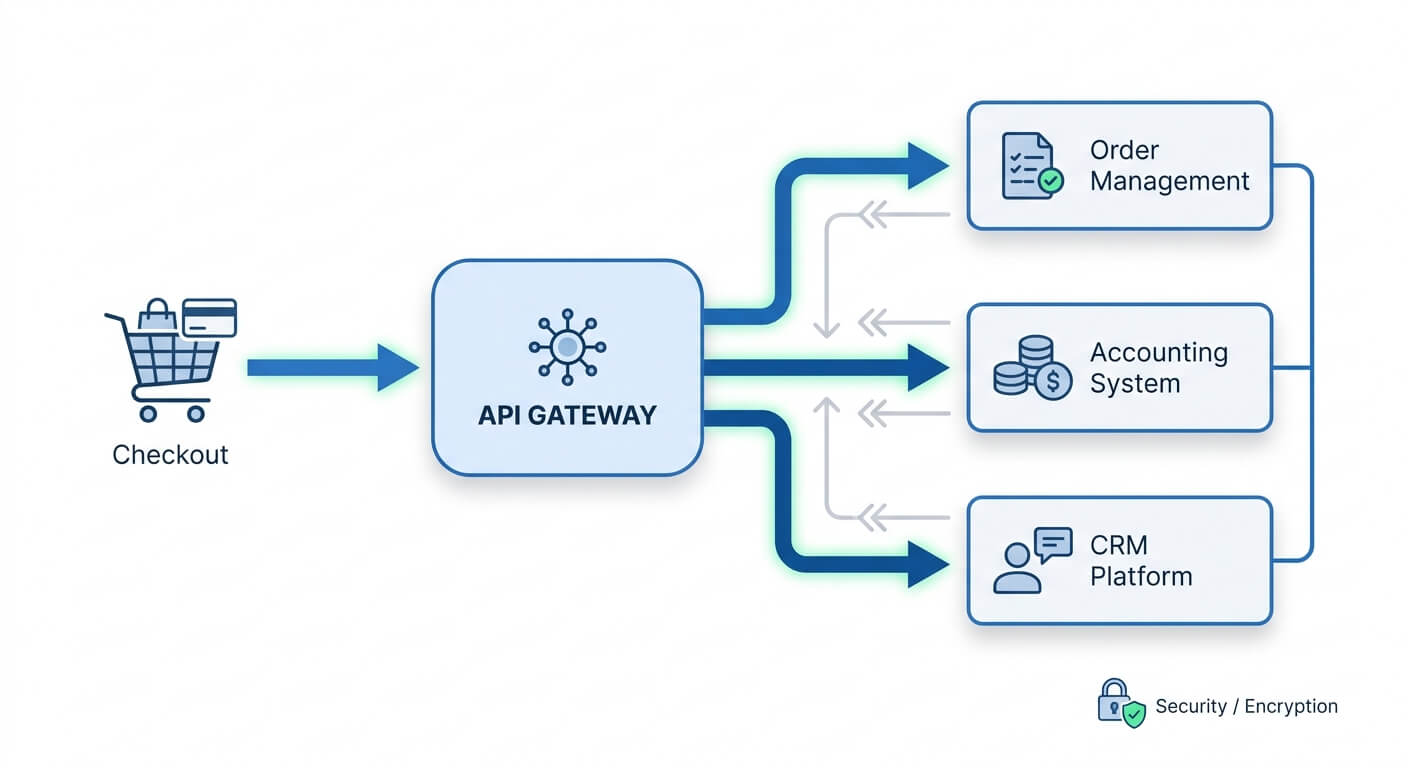
The challenge for small retailers isn’t collecting this data, it’s connecting it. Most modern e-commerce platforms capture behavioural data automatically, but it remains siloed unless you actively integrate your systems to create a unified customer view.
AI Tools and Technologies for Small Retailers
AI email personalisation tools have evolved from enterprise-only solutions to accessible platforms that small retailers can implement without technical expertise. The key is choosing tools that integrate with your existing systems rather than requiring complete platform changes.
Machine learning algorithms power most personalisation features. These algorithms analyse customer data to identify patterns humans would miss. They can predict which products a customer is most likely to buy next, when they’re most likely to make another purchase, and what type of messaging will resonate.
Predictive analytics help retailers anticipate customer needs. Instead of reacting to what customers have already done, you can anticipate what they’re likely to do next. A customer who bought a camera last month might be interested in accessories this month. Someone whose purchase patterns suggest they’re planning an event might appreciate relevant product suggestions.
Dynamic content generation automatically creates personalised email content for each recipient. Rather than creating dozens of different email campaigns, you create one template with personalised sections that populate based on individual customer data. This saves enormous amounts of time while delivering more relevant messages.
A/B testing capabilities built into AI platforms help optimise personalisation strategies over time. The system automatically tests different subject lines, send times, and content variations to identify what works best for different customer segments.
The most effective tools for small retailers integrate directly with popular e-commerce platforms like Shopify, WooCommerce, or Magento. This eliminates complex technical setup and ensures customer data flows automatically between systems.
Segmentation Strategies for Maximum Impact
Effective segmentation transforms generic email lists into targeted audiences that respond to specific messages. The goal isn’t to create hundreds of tiny segments, but to identify meaningful groups that require different communication approaches.
Behavioural segmentation often delivers the highest returns. Recent purchasers need different messaging than customers who haven’t bought anything in six months. Active browsers who haven’t purchased yet represent a different opportunity than customers who rarely visit your website.
Lifecycle stage segmentation ensures customers receive appropriate messages for their relationship with your brand. New subscribers need welcome series that introduce your products and brand story. Regular customers need loyalty programmes and exclusive offers. At-risk customers need re-engagement campaigns.
Value-based segmentation helps allocate marketing efforts efficiently. Your top 20% of customers typically generate 60-80% of revenue. These customers deserve more personalised attention and exclusive treatment than one-time bargain hunters.
Product affinity segments group customers by their interests and preferences. Someone who consistently buys premium products responds differently to pricing messages than someone who only purchases during sales. Customers interested in specific categories can receive targeted content about new arrivals and related products.
Geographic segmentation matters more than many retailers realise. Local weather, events, and seasonal patterns affect purchasing behaviour. A retailer with customers across different climates should send different seasonal product recommendations to different regions.
The key to successful segmentation is starting simple and refining over time. Begin with 3-5 clear segments based on behaviour or purchase history, then add complexity as you learn what resonates with each group.
Automated Email Sequences That Convert
Automated email sequences nurture leads systematically without constant manual intervention. The most effective sequences combine timing, relevance, and clear calls to action to guide prospects through the purchasing journey.
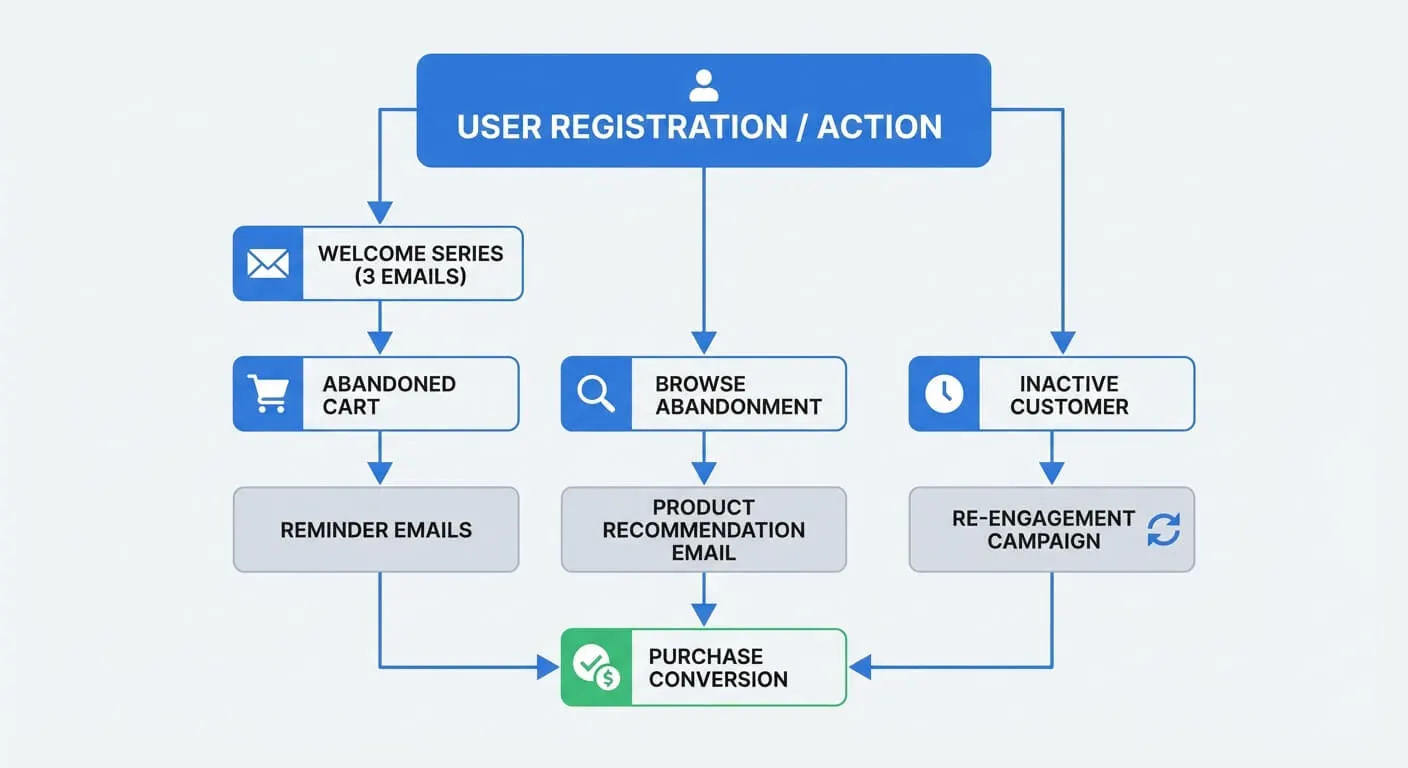
Welcome sequences introduce new subscribers to your brand and products. A well-designed welcome series typically includes 3-5 emails sent over the first two weeks after signup. The first email confirms subscription and sets expectations. Subsequent emails showcase popular products, share your brand story, and provide useful content related to your products.
Abandoned cart sequences recover potentially lost sales by following up with customers who added items to their cart but didn’t complete the purchase. Forrester research from 2024 found that retailers using AI-optimised cart abandonment emails recovered an average of 15% of abandoned carts, compared to 8% for generic reminder emails that fail to address the specific reasons why customers abandoned their purchases in the first place.
Post-purchase sequences maintain engagement after the sale. These emails can include order confirmations, shipping updates, delivery confirmations, and follow-up requests for reviews. More sophisticated sequences suggest complementary products or accessories based on what the customer purchased.
Re-engagement sequences target customers who haven’t interacted with your emails or website recently. Rather than sending the same message to everyone, AI can personalise these sequences based on each customer’s previous behaviour and preferences.
Browse abandonment sequences reach customers who viewed products on your website but didn’t add anything to their cart. These sequences work differently than cart abandonment because they target earlier-stage interest. The messaging focuses on education and social proof rather than urgency.
Seasonal and event-based sequences align with predictable customer needs. A customer who bought a gift last Christmas might appreciate early access to holiday collections this year. Someone who purchased gardening supplies in spring might want autumn planting suggestions.
The effectiveness of automated sequences depends on optimising your processes to ensure the right message reaches the right person at the right time without manual intervention.
Timing and Frequency Optimisation
Send timing dramatically affects email performance, yet most retailers use the same schedule for every subscriber. AI personalisation tools can optimise send times for individual recipients based on their historical engagement patterns.
Time zone considerations matter more for retailers with geographically dispersed customers. Sending emails at 9 AM Eastern Time means West Coast customers receive them at 6 AM. AI tools can automatically adjust send times to reach each subscriber during their local business hours or preferred reading times.
Frequency preferences vary significantly between customers. Some subscribers appreciate daily updates about new products and sales. Others prefer weekly summaries or monthly newsletters. Sending too frequently to preference customers leads to unsubscribes, while sending too infrequently to engaged customers means missed opportunities.
Day of week optimisation can improve open rates by 20-30% for individual subscribers. While industry averages suggest certain days perform better overall, individual preferences often differ from the norm. Someone might consistently open emails on Sunday evenings while ignoring Tuesday morning messages.
Seasonal timing adjustments account for changing customer behaviour throughout the year. Holiday shopping season requires different frequency and timing than summer months. Back-to-school periods, seasonal weather changes, and industry-specific cycles all influence optimal send times.
The key insight is that optimal timing isn’t about finding the perfect time that works for everyone. It’s about identifying the best time for each individual subscriber and automating delivery accordingly.
Measuring Success and ROI
Tracking the right metrics helps you understand whether your personalisation efforts actually improve business results. Many retailers focus on vanity metrics like open rates while ignoring more meaningful measures of success.
Revenue per email represents the most important metric for retail personalisation. This measures the actual monetary value generated by each email sent. Personalised emails should generate significantly more revenue per send than generic campaigns.
Conversion rate improvements show whether personalisation actually influences purchasing behaviour. A personalised email that generates more clicks but the same conversion rate hasn’t solved the fundamental challenge of turning interest into sales.
Lifetime value increases indicate whether personalisation creates more valuable customer relationships over time. Customers who receive relevant, personalised communications typically make more purchases and remain active longer than those receiving generic messages.
Engagement quality metrics go beyond basic open and click rates. Time spent reading emails, forwards to friends, and replies to campaigns indicate genuine customer interest rather than superficial engagement.
Cost efficiency improvements matter for small retailers with limited marketing budgets. If personalisation allows you to send fewer emails while generating the same or better results, you’ve achieved meaningful efficiency gains.
According to data from the Office for National Statistics in 2024, UK retailers using advanced email personalisation achieved an average return on investment of $50 for every $1 invested in personalisation technology, compared to $35 per $1 for generic email campaigns that lack sophisticated customer targeting and behaviour-based content delivery systems.
The payback period for personalisation investments typically ranges from 3-6 months for small retailers, depending on list size and current email performance. The key is measuring actual business impact rather than just marketing metrics.
Implementation Challenges and Solutions
Implementing AI email personalisation presents several common challenges for small retailers. Understanding these obstacles in advance helps you plan more effectively and avoid common pitfalls.
Data quality issues represent the most frequent implementation barrier. Personalisation systems require clean, consistent customer data to function effectively. Duplicate records, inconsistent formatting, and incomplete information can derail personalisation efforts before they begin.
Technical integration complexity can overwhelm retailers without dedicated IT resources. Many personalisation tools require connecting multiple systems and configuring data flows between platforms. The solution involves choosing tools that offer pre-built integrations with your existing e-commerce and email platforms.
Content creation demands increase when you move from one-size-fits-all emails to personalised campaigns. Creating enough content variations to support meaningful personalisation requires more upfront planning and ongoing content development.
Privacy compliance adds another layer of complexity, particularly with GDPR requirements in the UK. Personalisation requires collecting and processing customer data in ways that must comply with privacy regulations while maintaining transparency with customers.
Staff training needs often exceed initial expectations. Even user-friendly AI tools require team members to understand new concepts and workflows. Building internal expertise takes time and ongoing investment.
Budget constraints can limit options for small retailers. While AI personalisation tools have become more affordable, they still represent a significant investment for businesses operating on tight margins.
The most successful implementations start small and scale gradually. Begin with basic behavioural segmentation and simple automated sequences, then add complexity as your team gains experience and confidence with the tools.
Advanced Personalisation Techniques
Beyond basic segmentation and timing optimisation, advanced personalisation techniques can dramatically improve email performance for retailers ready to invest in more sophisticated approaches.
Predictive product recommendations use machine learning to suggest items customers are most likely to purchase next. These systems analyse purchase history, browsing behaviour, and similar customer patterns to identify relevant products for each individual.
Dynamic pricing personalisation shows different prices or discount levels to different customers based on their purchasing patterns and price sensitivity. High-value customers might see premium products at full price, while price-sensitive customers receive targeted discounts.
Content personalisation goes beyond product recommendations to customise the entire email experience. This might include different imagery, messaging tone, or content focus based on individual customer preferences and behaviour.
Cross-channel personalisation coordinates email content with other marketing touchpoints like website personalisation, social media advertising, and retargeting campaigns. Customers receive consistent, personalised experiences across all interactions with your brand.
Real-time personalisation updates email content based on the most current customer behaviour. If someone views a product on your website minutes before opening an email, that product can be dynamically featured in the email content.
These advanced techniques require more sophisticated tools and greater technical expertise but can deliver substantial improvements in customer engagement and sales conversion.
Building Your Personalisation Strategy
Developing an effective email personalisation strategy requires careful planning and systematic implementation. The most successful retailers approach personalisation as an ongoing process rather than a one-time project.
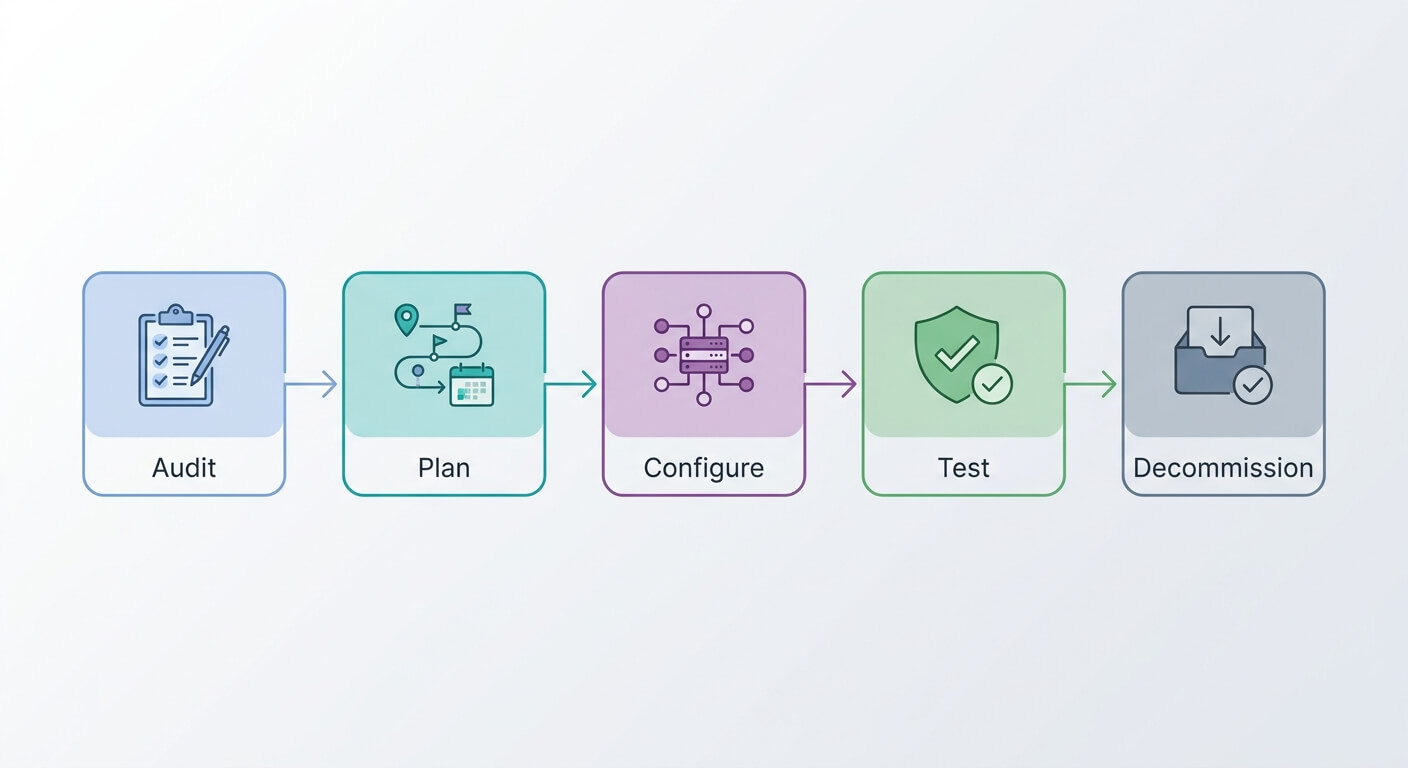
Start by auditing your current email performance and customer data. Identify gaps in your data collection and areas where your current campaigns underperform. This analysis helps prioritise which personalisation techniques will deliver the greatest impact.
Define clear objectives for your personalisation efforts. Whether you want to increase open rates, improve conversion rates, or enhance customer lifetime value, specific goals help guide technology selection and campaign development.
Choose technology platforms that align with your technical capabilities and budget constraints. The best personalisation tool is one your team can effectively implement and manage, not necessarily the most feature-rich option.
Develop content frameworks that support personalised messaging without requiring constant manual content creation. Template-based approaches with variable elements can provide personalisation efficiency without overwhelming your content creation resources.
Create testing schedules to continuously optimise your personalisation efforts. Regular A/B tests help identify which personalisation techniques work best for your specific audience and products.
Working with specialists in marketing automation can accelerate your implementation timeline and help avoid common pitfalls that delay results.
The Future of Retail Email Personalisation
Email personalisation continues evolving as AI technology becomes more sophisticated and customer expectations increase. Understanding emerging trends helps retailers prepare for future opportunities and challenges.
Conversational AI integration will enable more interactive email experiences. Customers might reply to emails with questions or requests that AI systems can understand and respond to automatically.
Visual personalisation will extend beyond product recommendations to include personalised images, colours, and layouts based on individual preferences and past behaviour.
Voice integration might allow customers to interact with email content through voice commands or receive audio versions of personalised email content.
Predictive personalisation will become more accurate as AI systems access larger datasets and more sophisticated algorithms. This will enable retailers to anticipate customer needs with greater precision.
Privacy-focused personalisation will develop new techniques that deliver relevant experiences while minimising data collection and processing requirements.
The retailers who begin implementing AI personalisation now will be best positioned to take advantage of these emerging capabilities as they become available.
Email personalisation using AI represents a fundamental shift from broadcasting messages to having personalised conversations with individual customers. Small retailers who embrace this approach will find themselves better equipped to compete with larger competitors while building stronger relationships with their customers.
The technology has evolved to the point where sophisticated personalisation is accessible to small businesses, not just enterprise retailers with unlimited budgets. The question isn’t whether to implement email personalisation, but how quickly you can get started and begin learning what works best for your customers. Those who develop comprehensive AI automation strategies now will create sustainable competitive advantages that compound over time.
Frequently Asked Questions
What is the difference between basic email personalisation and AI-powered personalisation?
Basic email personalisation typically involves inserting a customer’s name or referencing their last purchase in a templated email. AI-powered personalisation goes significantly further by analysing patterns across multiple data points including browsing behaviour, purchase history, engagement timing, and product preferences to predict what content, products, and timing will resonate with each individual customer. AI systems continuously learn and optimise these predictions based on customer responses, whilst basic personalisation relies on static rules that require manual updating.
How much does AI email personalisation cost for small retailers?
AI email personalisation platforms for small retailers typically range from $60 to $600 per month, depending on list size and feature requirements. Most platforms use tiered pricing based on the number of subscribers or emails sent. Implementation costs vary but many modern solutions offer pre-built integrations with popular e-commerce platforms that reduce setup costs significantly. According to data from the Office for National Statistics in 2024, UK retailers achieve an average ROI of $50 for every $1 invested in personalisation technology, with payback periods typically ranging from 3-6 months for small retailers.
Do I need technical expertise to implement AI email personalisation?
Most modern AI email personalisation platforms are designed for non-technical users and don’t require coding skills or extensive technical knowledge. The key is choosing tools that integrate directly with your existing e-commerce platform (such as Shopify, WooCommerce, or Magento) to avoid complex technical setup. That said, someone on your team will need to invest time learning the platform’s features and understanding personalisation concepts. Many retailers find it helpful to work with marketing automation specialists during initial implementation to accelerate the learning curve and avoid common pitfalls.
How long does it take to see results from email personalisation?
Most small retailers begin seeing measurable improvements in email performance within 4-6 weeks of implementing AI personalisation, according to McKinsey analysis from 2024. Initial results typically include improved open rates and click-through rates as send-time optimisation takes effect. More substantial revenue improvements usually appear within the first 90 days as automated sequences and product recommendation systems accumulate enough data to optimise effectively. The key is starting with foundational elements like behavioural segmentation and welcome sequences before layering in more advanced techniques.
What customer data do I need to collect for effective email personalisation?
Effective email personalisation requires four core data types: purchase history (what customers bought, when, and how much they spent), browsing behaviour (which products they viewed and for how long), email engagement history (when they open emails and which content they click), and basic demographic information (location for timezone and seasonal relevance). Most modern e-commerce platforms automatically collect this data, but it often remains siloed across different systems. The challenge isn’t collecting the data but rather integrating these systems to create a unified customer view that AI personalisation tools can access and analyse effectively.
How does AI email personalisation go beyond just using a customer’s name?
AI email personalisation analyses comprehensive customer data, including browsing history, purchase patterns, and engagement timing. This allows it to recommend relevant products, trigger follow-up emails for abandoned carts, and send communications when individual customers are most likely to engage, creating genuinely tailored experiences far beyond a simple name insertion.
Why is manual email personalisation impractical for small retailers with many subscribers?
Manual personalisation becomes unmanageable once a retailer exceeds around 500 subscribers. It’s impossible for humans to track individual customer behaviours, such as past purchases or preferred email times, at scale. AI steps in to process this vast amount of data, ensuring relevant content is delivered efficiently without replacing human strategic oversight.
What kind of data is essential for effective AI email personalisation?
Effective AI email personalisation relies on clean, organised data from various sources. This includes website browsing behaviour, purchase history from POS systems, and engagement metrics from email platforms. AI tools need integrated access to this information to build accurate customer profiles and inform personalised content and timing strategies.
What impact can AI email personalisation have on conversion rates for retailers?
Retailers utilising advanced AI personalisation techniques have seen significant improvements in conversion rates. More notably for small businesses, personalised emails generated six times higher transaction rates, transforming browsers into committed buyers.