

Single workflow joining two systems
From $450
One trigger, one path, no exception handling
We map your workflows, find the steps that cost the most time and money, and rebuild them for growing businesses across the UK, US, and Australia, so your business can grow without your processes holding it back. Fixed-price builds start from $450 for a single workflow.
Example workflow
If you want the number before the conversation, our process cost calculator turns how often a task happens and how long it takes into what it costs you a year.
Inefficient processes cost time, money, and frustration. We identify bottlenecks and design streamlined workflows that make your business run smoothly.
Cut unnecessary steps, eliminate redundancies, and reduce operational costs. Every inefficiency you identify and remove is money back in the business.
Consistent processes deliver consistent results. Reduce errors, improve output quality, and ensure your customers get reliable delivery every time.
Speed up operations without cutting corners on quality. Streamlined workflows mean shorter turnaround times for customers and fewer delays internally.
Fewer roadblocks, more focus. Clear processes give your team the confidence to work efficiently without constant interruptions or rework.
From sales pipelines to fulfillment workflows, we optimise the processes that matter most to your business.
Accelerate deals from lead to close. Streamline qualification, proposal creation, and contract workflows to cut cycle time and improve your overall win rate.
Get orders to customers faster and with fewer mistakes. Optimise inventory management, order processing, and shipping workflows to cut fulfilment time.
First impressions set the tone. Build onboarding processes that activate customers quickly, reduce early churn, and set the foundations for long-term retention.
Remove friction from day-to-day operations. Streamline approvals, reporting, and team handoffs to free up time and clear the bottlenecks holding everyone back.
Our data-driven approach combines proven methodologies with modern tools to deliver measurable improvements.
Eliminate waste, reduce variation, and focus on value. We apply lean principles to identify and remove non-value-adding activities costing your business time and money.
Visualise how work flows today, then design how it should flow tomorrow. Detailed maps surface bottlenecks, redundancies, and clear opportunities for measurable improvement.
Measure everything before changing anything. Time studies, error tracking, and cost analysis establish the baseline needed to prove ROI and make confident, well-informed decisions.
People determine whether process changes stick. We provide training, clear documentation, and support to drive adoption and get real buy-in from your whole organisation.
Fixed prices, agreed after a discovery call and before any work starts.
*All prices are listed in US dollars.
From $450
One trigger, one path, no exception handling
From $1,400
Several systems, error handling, notifications
From $2,375
Extraction, validation, approval routing
From $7,250
Bespoke interface, database, user accounts
A $1,400 workflow automating 5 hours a week of staff time pays for itself in 2 to 4 months. Work out yours
Full breakdown: how to calculate true AI automation costs.
We follow a data-driven methodology to transform your operations.
We map current processes, identify bottlenecks, and measure inefficiencies to establish a baseline for improvement.
We build optimised workflows that eliminate waste, reduce steps, and create clear accountability across teams.
We roll out new processes with training and documentation, ensuring smooth adoption and support during transition.
We track performance indicators, gather feedback, and refine workflows as needed. Optimisation is ongoing.
Common questions about process optimisation and implementation
We use a combination of process mapping, time studies, data analysis, and team interviews. We'll observe your workflows, measure key metrics (time, cost, error rates), and identify bottlenecks, redundancies, and unnecessary steps. The result is a clear picture of where improvements will have the biggest impact.
Most clients see 20-40% improvements in efficiency within 3-6 months. This translates to reduced operational costs, faster delivery times, and improved quality. We quantify the baseline before starting and track improvements throughout, so ROI is measurable and transparent.
We design rollout plans that minimise disruption. Changes can be phased, piloted with small teams first, or implemented gradually. We work with your schedule and operational constraints to ensure smooth transitions without impacting customer service or revenue.
Yes. We provide training, documentation, and ongoing support to ensure your team adopts new processes successfully. Process changes only work if people actually follow them, so we focus heavily on communication, training, and getting buy-in from everyone involved.
Initial analysis and recommendations typically take 2-4 weeks. Implementation timelines vary based on scope. Small improvements can be rolled out in weeks, while comprehensive operational overhauls may take 2-3 months. We'll provide a detailed timeline during discovery.
Common signals: your team regularly works overtime just to keep up, the same mistakes happen repeatedly, new staff take months to get up to speed, or you can't take on more clients without hiring. If any of these apply, there are almost certainly processes worth redesigning.
We work across professional services, e-commerce, hospitality, healthcare, retail, and construction. Process problems look different in each sector, but the underlying approach is the same: map what exists, measure what it costs, and redesign it around how the business actually needs to work.
We use a mix of process mapping software, workflow documentation, and where relevant, n8n for automation implementation. The specific tools depend on your setup, but every engagement ends with clear documentation your team can understand and maintain without us.
Process optimisation redesigns how work gets done: removing unnecessary steps, clarifying responsibilities, and improving flow. Automation then executes that improved process without manual effort. You should optimise before you automate: automating a broken process just makes the same mistakes faster. We often do both, but always in the right order.
Yes. Client onboarding is a strong first automation because the steps are known and the delays are all handoffs. A typical build sends the welcome and intake form, creates the project and folder structure, raises the first invoice, schedules the kickoff, and chases anything outstanding, with a single view of where each new client has got to.
A task that takes a member of staff 5 hours a week costs about $10,400 a year, at a staff cost of $40 an hour. Automating it typically saves between half and four fifths of that, so a $1,400 workflow pays for itself in 2 to 4 months and keeps saving after that. Your own payback depends on how often the task happens, how long it takes and who does it. Our free process cost calculator works it out from your numbers, and we calculate it properly before quoting.
Once we've mapped your processes, automation is the next step. See our AI automation, marketing automation, and system integration services.
Finding where the time actually goes before you automate anything.
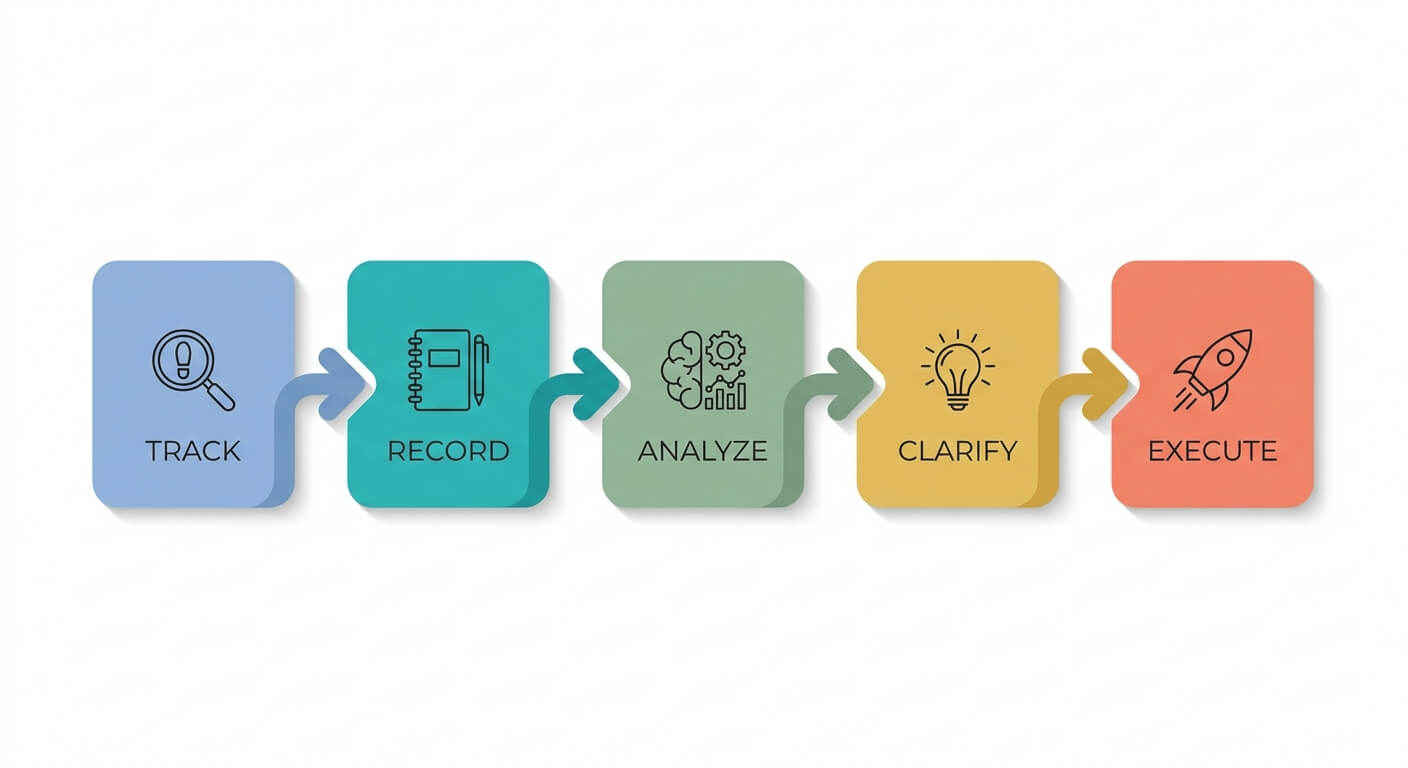
Learn how to map a business process before automating it using the five-step TRACE method. Avoid costly mistakes and build automations that actually work.
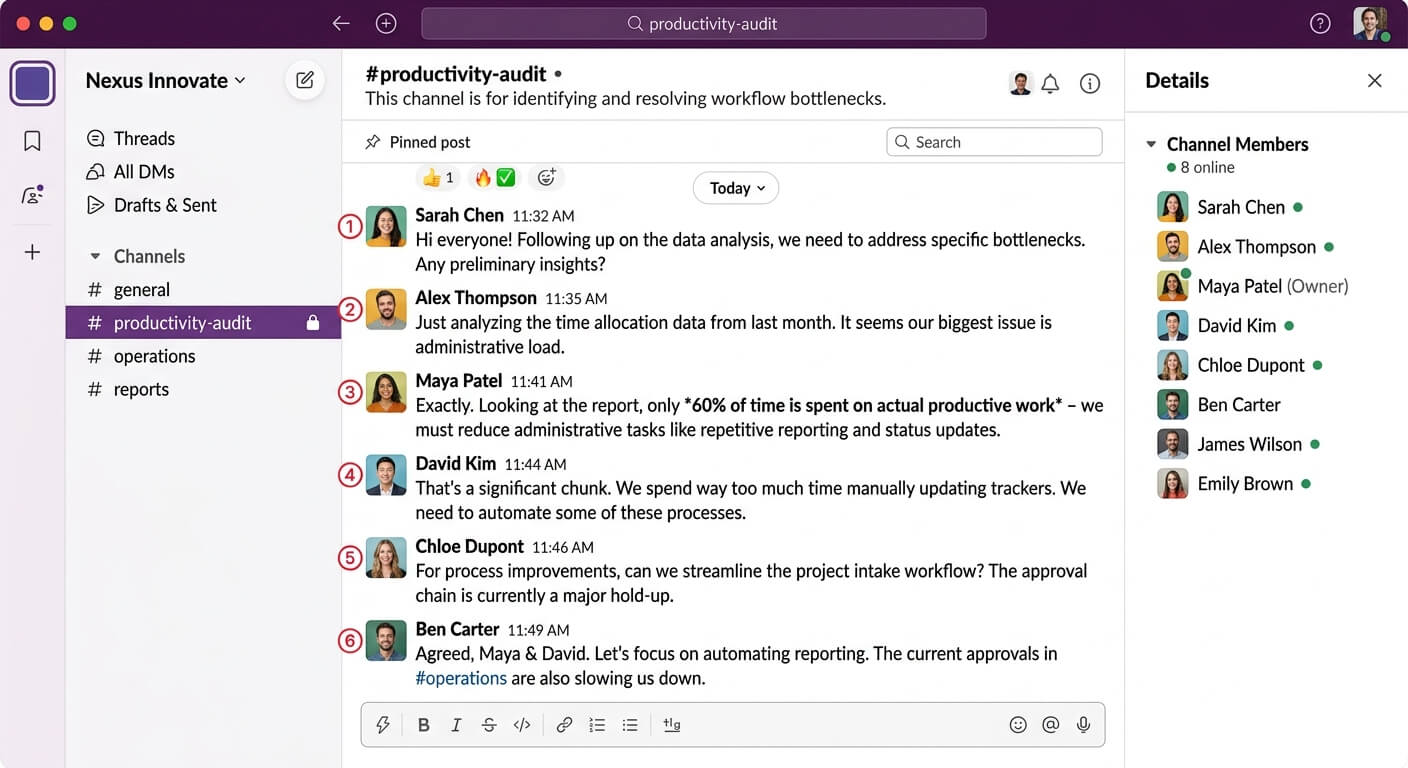
How to find the productivity drains your team has stopped noticing, using a four-step audit you can run yourself, and what to fix first.

Eliminate invoicing admin bottlenecks with smart automation. Reduce payment delays, cut errors, and reclaim 15-20 hours monthly for business growth.
Let's identify inefficiencies and build processes that drive sustainable growth.
Book a Discovery Call