

Single workflow joining two systems
From $450
One trigger, one path, no exception handling
We connect Shopify to your ERP, warehouse, helpdesk, marketing platform and EDI trading partners, so orders, stock and customer data stay consistent, for retailers across the UK, US, and Australia. A single Shopify integration is a fixed price from $450.
Example workflow
A Shopify integration connects your store to the systems that run the rest of the business, so an order placed in Shopify updates stock, finance, fulfilment and customer records without anyone copying data between tabs. The connections that matter most are ERP for stock and financials, email and SMS for marketing, a helpdesk for support context, a warehouse or 3PL for fulfilment, and EDI where a retail partner requires it. Marathon builds these on n8n against the Shopify Admin API, which means the logic follows how your store actually operates rather than what a connector assumes.
The failure everyone remembers is overselling: two systems each adjusting the same stock number, disagreeing under load, and a customer buying something that is not there. Deciding which system owns stock is the first thing we settle, before anything is built.
Orders into NetSuite as sales orders, items and stock back to Shopify, fulfilments and refunds kept in step, with one system owning stock truth.
Events the standard app never sees, pushed into Klaviyo from your ERP, helpdesk or subscription system, so segments reflect the whole customer.
Purchase orders, ship notices and invoices mapped to a trading partner's specification, validated before sending, with rejections surfaced rather than swallowed.
Order history and fulfilment state on the ticket, and refunds or address changes made once in the helpdesk rather than twice.
Orders pushed for picking, tracking returned, stock reconciled on a schedule, designed so Shopify and the warehouse cannot both adjust the same number.
Sales, fees and payouts summarised into QuickBooks so a Shopify payout reconciles against the bank in one action, rather than arriving as hundreds of separate invoices.
The same treatment for Xero, matching the payout rather than the order, so the figure on the bank statement is the figure in the books.
Fixed prices, agreed after a discovery call and before any work starts.
*All prices are listed in US dollars.
From $450
One trigger, one path, no exception handling
From $1,400
Several systems, error handling, notifications
From $2,375
Extraction, validation, approval routing
From $7,250
Bespoke interface, database, user accounts
A $1,400 workflow automating 5 hours a week of staff time pays for itself in 2 to 4 months. Work out yours
Full breakdown: how to calculate true AI automation costs.
Check the Shopify App Store first, and if an app covers your case, buy it. It will cost less than a build and someone else maintains it. Custom work earns its place in four situations: a chain crossing three or more systems, mapping rules specific to your business, an app that exists but cannot express a condition you depend on, and app subscriptions that have quietly become a real monthly cost. If none of those describe you, we will say so on the call.
Yes, and the part that matters is how the data is summarised. Most sync apps push every order into QuickBooks as its own invoice, which technically works and leaves your bookkeeper reconciling hundreds of lines against one bank deposit. We summarise by payout instead, so sales, refunds and Shopify fees land as a single entry that matches what actually hit the account. If you want to understand the options before talking to anyone, my guide to connecting Shopify and QuickBooks walks through all four approaches honestly, including the ones that do not need us.
Orders flow from Shopify into NetSuite as sales orders, with customers matched to existing records rather than duplicated. Item and inventory data flows the other way so NetSuite stays the source of stock truth and Shopify reflects it. Fulfilments and refunds sync back so both systems agree on order state. The work is almost entirely in the mapping rules and in deciding which system wins on a conflict, which we agree with you before building.
Klaviyo's own Shopify app covers the common cases well and you should install it first. Custom work earns its place when you need events Klaviyo does not receive natively, for example a signal from your ERP, helpdesk or subscription system, or when you want profiles enriched from data that does not live in Shopify. We add those events rather than replace the app.
Yes. EDI is usually forced on you by a stockist rather than chosen, and the requirement is specific to that partner: their document set, their identifiers, their transport. We map purchase orders, advance ship notices and invoices between the partner's format and Shopify, validate before sending, and hold anything that fails so a rejection is visible rather than silent. Tell us which trading partner and we will work to their specification.
Agents see the customer's order history, fulfilment status and refund state on the ticket, so they stop switching to Shopify to answer basic questions. Where it earns most is the reverse direction: a refund or address change made once, in the helpdesk, writing back to Shopify rather than being done twice.
Yes. Orders are pushed to the warehouse as they are ready to pick, tracking and fulfilment come back to Shopify, and stock levels are reconciled on a schedule. The design question we settle first is which system owns stock, because letting both Shopify and the warehouse adjust the same number is the usual cause of overselling.
Start with the Shopify App Store. If an app does what you need, it will be cheaper and maintained for you. Custom work earns its place when the chain crosses three or more systems, when the mapping rules are specific to your business, when an app exists but cannot express a condition you rely on, or when app subscriptions have quietly become a significant monthly cost. We will point you at the app when the app is right.
No. Everything we build runs outside the storefront, reacting to webhooks from Shopify rather than sitting in the page load. Nothing we add executes while a customer is browsing or checking out, so Core Web Vitals are unaffected.
Shopify rate-limits its API, so a workflow that ignores that will fail exactly when it matters. We queue and throttle against the limit, retry safely without duplicating orders, and alert on a backlog rather than dropping records. A Black Friday spike is the test worth designing for.
A single connection with clean mapping, for example orders into a helpdesk, is usually one to two weeks. ERP and EDI work takes longer because the edge cases and the partner requirements are the bulk of the effort. We quote a fixed price after the discovery call.
A task that takes a member of staff 5 hours a week costs about $10,400 a year, at a staff cost of $40 an hour. Automating it typically saves between half and four fifths of that, so a $1,400 workflow pays for itself in 2 to 4 months and keeps saving after that. Your own payback depends on how often the task happens, how long it takes and who does it. Our free process cost calculator works it out from your numbers, and we calculate it properly before quoting.
Related work: Xero integration, CRM integration, system integration, and n8n development.
How connected retail systems stop overselling and keep stock honest.
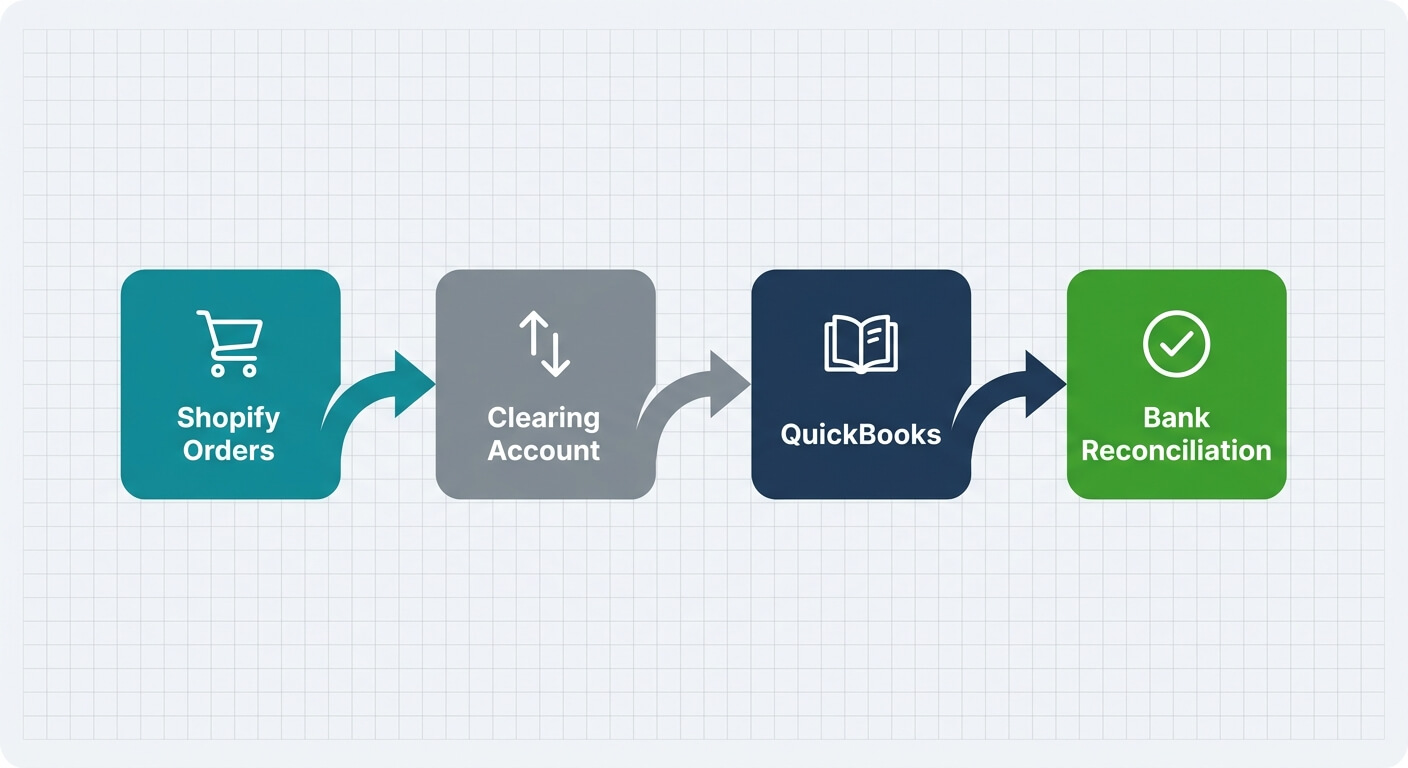
A practical Shopify and QuickBooks integration guide for small retailers: compare four sync options, real costs and setup time, then pick the right one.

Learn how connecting Xero and Shopify eliminates manual inventory updates, reduces stockouts by up to 30%, and gives retailers real-time financial visibility.
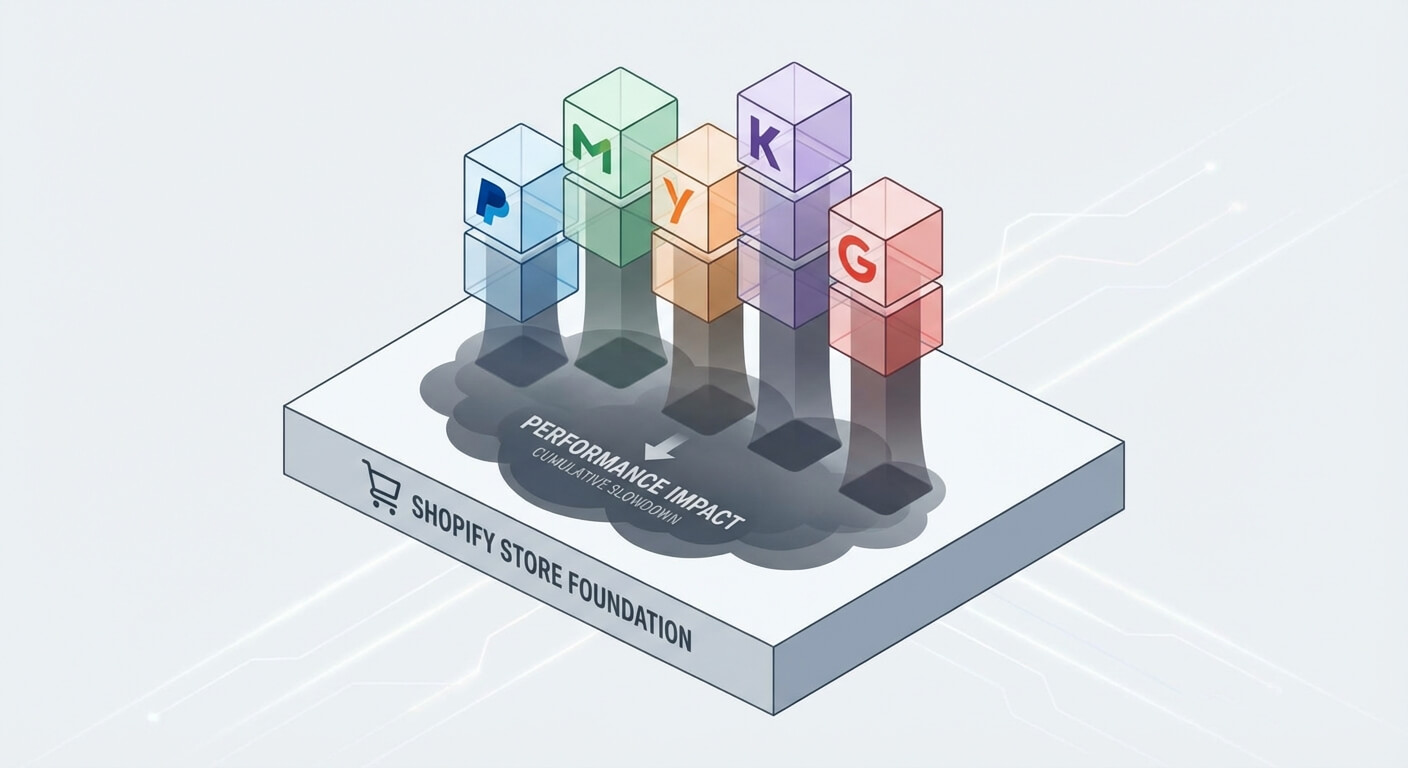
Optimise your Shopify store's Core Web Vitals for better search rankings and sales. Practical strategies for improving LCP, FID, and CLS performance.
Tell us which systems your store already runs and where the double entry is, and we will tell you what is worth connecting.
Book a Discovery Call