GDPR Compliance Essentials for AI in Healthcare Clinics
Essential GDPR compliance guide for healthcare clinics implementing AI systems. Learn consent management, data protection, and regulatory requirements.

Contents
Healthcare clinics processing patient data through AI still answer to GDPR first: what the system collects, why, and how long it’s kept. Get that structure right early, and the AI implementation itself moves faster.
Clinics I work with often find the promise of AI automation becomes overwhelming once they realise the depth of data protection requirements. The good news? GDPR compliance for AI in healthcare isn’t insurmountable. It requires understanding, planning, and the right approach to implementation.
Understanding GDPR in Healthcare AI Context
The General Data Protection Regulation treats health data as a special category, requiring explicit consent and additional safeguards. When AI enters the equation, these requirements become more complex because machine learning systems process vast amounts of patient data in ways that weren’t anticipated when traditional consent forms were designed.
The challenge stems from AI’s fundamental nature: these systems learn from data patterns, often in ways that even their creators cannot fully explain. Traditional healthcare data processing follows predictable paths, but AI introduces an element of algorithmic decision-making that requires new approaches to consent, transparency, and patient rights.
Clinics must consider how AI systems process patient data differently from traditional electronic health records. Where a standard patient management system stores and retrieves data predictably, AI systems analyse patterns across datasets, potentially inferring sensitive information that patients never explicitly shared.
Legal Basis for AI Processing in Healthcare
Establishing a lawful basis for AI processing in healthcare requires careful consideration of GDPR’s six legal bases. Most healthcare AI implementations rely on either explicit consent or legitimate interests, though some diagnostic AI may qualify under vital interests or public task provisions.
Explicit consent works best when patients understand exactly how AI will process their data and can withdraw consent without affecting their care. However, consent becomes problematic when AI systems evolve or when machine learning models require training data from patients who cannot practically be re-contacted.
Legitimate interests often provides a more stable foundation for healthcare AI, particularly for diagnostic support systems or treatment optimisation tools. The key lies in conducting thorough legitimate interests assessments that balance the clinic’s operational needs against patient privacy rights.
According to McKinsey’s 2024 digital health report, clinics successfully implementing AI often use a hybrid approach: explicit consent for patient-facing AI features like personalised treatment recommendations, and legitimate interests for backend analytics that improve overall care quality without directly affecting individual treatment decisions.
The legal basis must be established before AI implementation begins. Retrofitting legal justification onto existing AI systems creates compliance gaps that regulators increasingly scrutinise during audits.
Patient Consent and Transparency Requirements
Modern healthcare AI demands a new approach to patient consent that goes beyond traditional tick-box exercises. Patients need to understand not just what data you’re collecting, but how AI systems will process it, what decisions the AI might influence, and how they can exercise their rights.
Transparency requirements under GDPR Article 13 and 14 become particularly challenging with AI systems. Clinics must explain algorithmic decision-making in language patients understand, without revealing proprietary algorithms or compromising system security.
Effective consent management for healthcare AI involves layered information provision. Initial consent forms cover the basics in plain English, whilst detailed information sheets explain technical aspects for patients who want deeper understanding. Dynamic consent systems allow patients to modify their preferences as AI implementations evolve.
I’ve worked with clinics that successfully implement AI automation strategy by creating consent frameworks that separate different AI functions. Patients might consent to AI-assisted appointment scheduling but opt out of AI-driven treatment recommendations. This granular approach respects patient autonomy whilst enabling beneficial AI implementation.
The challenge intensifies when AI systems learn and evolve. Static consent forms cannot anticipate how machine learning models might develop new capabilities or insights. Forward-looking consent frameworks address this by explaining the evolutionary nature of AI and establishing boundaries for acceptable system development.
Data Minimisation and AI Systems

AI systems’ appetite for data conflicts directly with GDPR’s data minimisation principle. Machine learning often improves with more data, creating tension between system performance and privacy protection. Healthcare clinics must balance these competing demands whilst maintaining both effective AI and regulatory compliance.
Data minimisation in AI context doesn’t mean using less data, it means using only data that’s necessary for specified purposes. A diagnostic AI system might legitimately require comprehensive patient histories, but the same system shouldn’t access financial information or non-medical personal details.
Practical data minimisation involves implementing technical controls that limit AI system access to relevant data subsets. Rather than giving AI systems broad database access, clinics should create filtered data views that contain only information necessary for specific AI functions.
Pseudonymisation and anonymisation techniques become crucial for training AI systems whilst protecting patient privacy. However, truly anonymous health data is rare because medical information often contains unique combinations that can re-identify individuals. Pseudonymisation provides better protection whilst maintaining data utility for AI training.
Regular data audits help ensure AI systems aren’t accumulating unnecessary information over time. Machine learning systems can gradually expand their data collection through feature creep, where initially narrow data requirements slowly broaden without explicit authorisation.
Technical Safeguards and Security Measures
Technical protection for healthcare AI extends beyond traditional cybersecurity into AI-specific vulnerabilities. Machine learning systems face unique threats like model inversion attacks, where attackers extract training data information, or adversarial attacks that manipulate AI decision-making.
Encryption becomes more complex with AI systems because machine learning often requires computations on encrypted data. Homomorphic encryption allows AI processing whilst maintaining data protection, but implementation requires specialist expertise and can significantly impact system performance.
Access controls must account for both human users and automated AI systems. Traditional role-based access control works for human staff, but AI systems need dynamic permissions that adapt based on processing context. A diagnostic AI might need broad data access for emergency cases but restricted access for routine consultations.
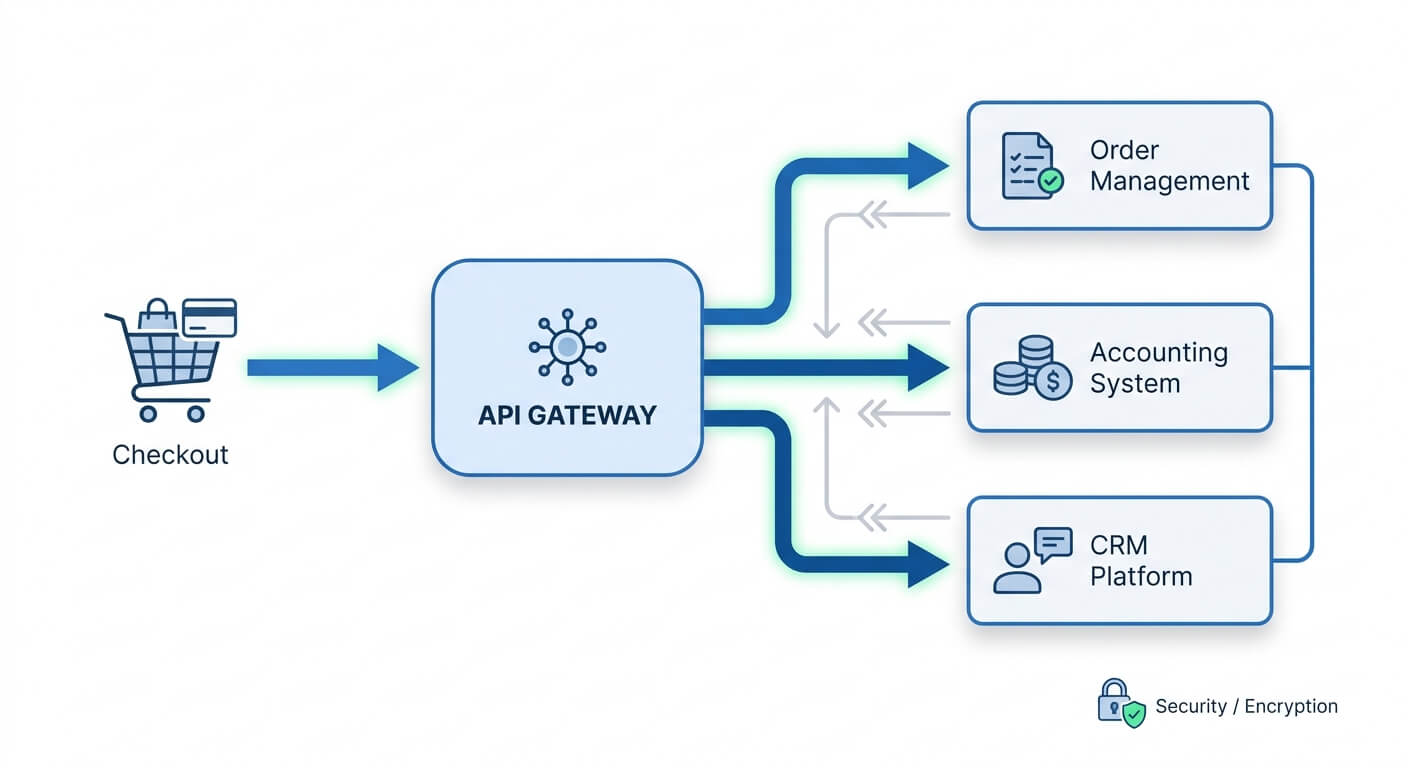
System integration plays a crucial role in maintaining security boundaries between AI systems and core healthcare infrastructure. Properly designed integration ensures AI systems can access necessary data without creating security vulnerabilities in patient management systems.
Audit logging becomes particularly important with AI systems because machine learning decisions can be difficult to trace retrospectively. Comprehensive logging must capture not just what data AI systems accessed, but what processing occurred and what decisions or recommendations resulted.
Rights of Data Subjects in AI Processing
GDPR grants patients specific rights regarding AI processing of their data, but exercising these rights with machine learning systems presents practical challenges. The right of access requires clinics to explain what data AI systems hold and how they’ve processed it, information that isn’t always readily available from complex machine learning models.
The right to rectification becomes complicated when AI systems have learned from incorrect data. Simply correcting the original data doesn’t automatically fix machine learning models that incorporated the error during training. Some corrections may require partial model retraining, a resource-intensive process.
Portability rights require clinics to provide patient data in structured, commonly used formats. This sounds straightforward until you consider AI-generated insights or risk scores. Are these AI-derived data points part of the patient’s portable data? Different interpretations exist, and clinics need clear policies.
The right to erasure, or “right to be forgotten,” presents the greatest technical challenge for healthcare AI. Removing individual patient data from trained machine learning models isn’t technically feasible with current technology. Most implementations rely on suppressing the individual’s data from future processing rather than removing historical learning.
Automated decision-making rights under Article 22 require particular attention in healthcare AI. Patients have the right not to be subject to purely automated decisions with significant effects. Most diagnostic AI systems avoid this restriction by positioning themselves as decision support tools rather than autonomous decision-makers, but the distinction must be genuine, not merely semantic.
Risk Assessment and Impact Analysis
Data Protection Impact Assessments (DPIAs) become essential for most healthcare AI implementations because they typically involve high-risk processing of special category data. Effective DPIAs for AI systems must address both traditional privacy risks and AI-specific concerns like algorithmic bias or unexpected inference capabilities.
Risk assessment for healthcare AI should consider the entire data lifecycle, from initial collection through AI training, deployment, and eventual model retirement. Each stage presents different privacy risks that require specific mitigation measures.
Algorithmic bias represents a significant but often overlooked privacy risk in healthcare AI. Biased AI systems can indirectly discriminate against protected groups, creating both GDPR compliance issues and potential human rights violations. Regular bias testing should be integrated into ongoing compliance monitoring. Structured risk management processes help identify potential issues before they become regulatory problems.
Ongoing monitoring becomes crucial because AI systems evolve over time. Initial risk assessments may not capture risks that emerge as machine learning models adapt to new data patterns. Regular reassessment ensures compliance frameworks keep pace with AI system development.
Vendor Management and Third-Party AI

Many healthcare clinics implement AI through third-party vendors rather than developing systems in-house. This creates additional GDPR compliance obligations around data processor agreements and shared responsibility for patient data protection.
Article 28 processor agreements must specifically address AI processing activities, including how vendors will handle patient data, what machine learning processes they’ll perform, and how they’ll support the clinic’s compliance obligations. Generic cloud service agreements rarely provide sufficient protection for healthcare AI implementations.
Due diligence for AI vendors requires evaluating not just their current compliance practices but their ability to adapt to evolving AI governance requirements. The regulatory environment for AI in healthcare continues developing, and vendors must demonstrate capability to maintain compliance as requirements change.
Data transfer restrictions become particularly complex when AI vendors operate across multiple jurisdictions. Training machine learning models often requires large datasets that may be processed in different countries, creating potential adequacy decision complications under GDPR Chapter V.
Vendor transparency varies significantly in the AI market. Some providers offer detailed information about their models and processing practices, whilst others treat algorithms as trade secrets. Healthcare clinics need sufficient transparency to meet their own GDPR obligations, particularly around explaining automated decision-making to patients.
Documentation and Compliance Monitoring
GDPR’s accountability principle requires healthcare clinics to demonstrate their compliance with data protection obligations. For AI systems, this means maintaining comprehensive documentation that covers both technical implementation and governance processes.
Records of processing activities must specifically describe AI systems, their purposes, data categories processed, and retention periods. Generic descriptions like “patient management system” aren’t sufficient when AI components perform specific functions like risk scoring or treatment recommendation.
Compliance monitoring for AI systems requires both automated and manual oversight. Automated monitoring can track data access patterns, processing volumes, and system performance metrics. Manual review ensures AI outputs remain clinically appropriate and don’t reveal unexpected privacy issues.
Incident response procedures must account for AI-specific breaches, including scenarios where machine learning models might inadvertently expose patient information through inference attacks or where AI system failures could compromise patient safety alongside privacy.
Regular compliance audits should include AI system evaluation alongside traditional data protection assessments. Many healthcare organisations find that AI implementations reveal gaps in their overall data governance frameworks that require broader organisational attention.
Building GDPR-Compliant AI Governance
Successful GDPR compliance for healthcare AI requires embedding privacy considerations into AI development and deployment processes from the outset. Privacy by design becomes particularly important because retrofitting privacy protections onto existing AI systems is often technically impossible or prohibitively expensive.
Governance frameworks should establish clear roles and responsibilities for AI oversight, including designated individuals responsible for privacy impact assessment, ongoing monitoring, and patient rights management. These roles often span traditional departmental boundaries, requiring cross-functional collaboration.
Staff training becomes crucial because healthcare AI introduces new privacy risks that traditional medical training doesn’t address. Clinical staff need to understand how AI systems process patient data and what information they should provide to patients about automated decision-making.
Strategic consulting often helps healthcare organisations develop comprehensive AI governance frameworks that balance innovation opportunities with regulatory compliance requirements. External expertise can identify potential compliance gaps that internal teams might miss.
Policy development should address the complete AI lifecycle, from initial system selection through deployment, monitoring, and eventual replacement. Policies should be specific enough to provide practical guidance but flexible enough to accommodate evolving AI capabilities and regulatory requirements.
Practical Implementation Steps
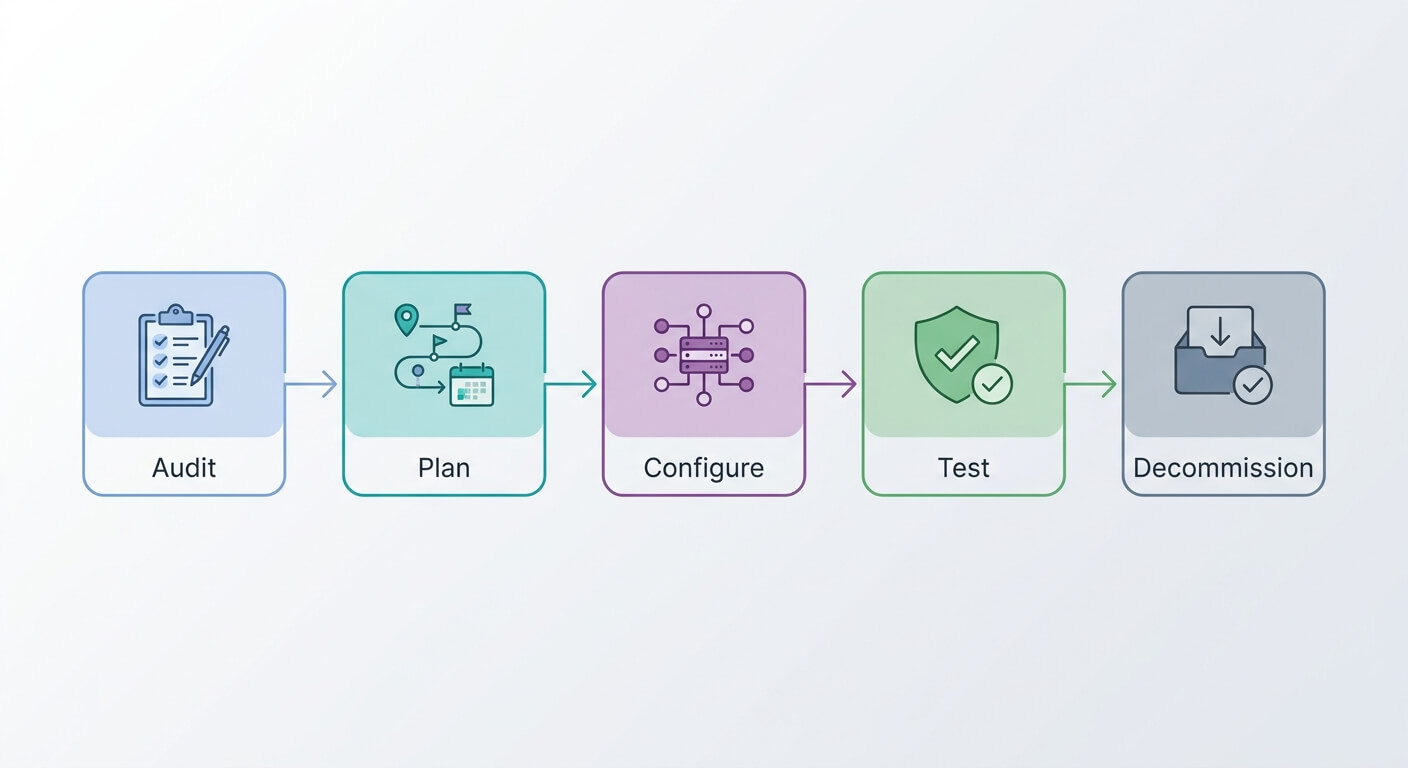
Implementing GDPR-compliant AI in healthcare clinics requires a structured approach that addresses both immediate compliance needs and long-term governance sustainability. The process typically begins with comprehensive assessment of existing data processing activities and identification of areas where AI could provide benefits whilst maintaining privacy protection.
Pilot implementations work better than organisation-wide AI rollouts because they allow compliance testing on a manageable scale. Successful pilots demonstrate both AI effectiveness and privacy protection before broader deployment, building confidence amongst staff and patients.
Process optimisation plays a crucial role in ensuring AI implementations enhance rather than complicate existing workflows. Well-designed AI systems should reduce administrative burden whilst strengthening privacy protections through automated compliance monitoring.
Integration planning must consider how AI systems will interact with existing patient management systems, ensuring data flows remain traceable and auditable. Poor integration often creates compliance blind spots where data processing becomes difficult to monitor or control.
Measuring success requires defining specific privacy metrics alongside clinical outcomes. Compliance isn’t binary; effective measurement tracks privacy risk reduction, patient satisfaction with AI transparency, and regulatory alignment over time.
Moving Forward with Confidence
GDPR compliance for AI in healthcare represents a significant but manageable challenge. Success depends on treating privacy protection as an enabler of innovation rather than a barrier to progress. Clinics that build robust privacy frameworks often find they can implement AI more quickly and effectively than those that treat compliance as an afterthought.
The investment in proper GDPR compliance pays dividends through reduced regulatory risk, increased patient trust, and more sustainable AI implementations. Patients increasingly expect transparency about how healthcare providers use their data, and clinics that provide this transparency gain competitive advantages alongside regulatory protection.
Technology continues evolving to support privacy-preserving AI, with techniques like federated learning and differential privacy becoming more practical for healthcare applications. These developments will make GDPR compliance easier over time, but fundamental principles of consent, transparency, and accountability remain constant.
Healthcare AI offers tremendous potential to improve patient outcomes whilst reducing administrative burden on clinical staff. Achieving this potential requires balancing innovation with privacy protection, but the balance is achievable with proper planning, appropriate expertise, and commitment to putting patient rights at the centre of AI governance frameworks.
Frequently Asked Questions
What makes healthcare data special under GDPR for AI processing?
Healthcare data is classified as special category data under GDPR Article 9, requiring explicit consent and enhanced safeguards. When AI processes this data, additional transparency obligations apply because machine learning systems analyse patterns in ways that traditional systems don’t. Clinics must explain both data collection and algorithmic processing to patients clearly.
Do patients have the right to refuse AI processing of their medical data?
Yes, patients can generally refuse AI processing under GDPR Article 21, though exceptions exist for legitimate interests or legal obligations. Clinics should implement granular consent systems allowing patients to opt out of specific AI functions whilst maintaining access to standard care. The key is ensuring refusal doesn’t disadvantage patients’ treatment options.
How often should we conduct Data Protection Impact Assessments for AI systems?
Initial DPIAs are mandatory before deploying high-risk AI systems in healthcare settings. However, because machine learning models evolve, annual reassessment is recommended as best practice. Significant changes to AI functionality, data sources, or processing purposes trigger the need for updated impact assessments regardless of timing.
What happens if our AI vendor experiences a data breach?
Under GDPR Article 28, data processors must notify controllers (your clinic) of breaches without undue delay. Your clinic then has 72 hours to notify the supervisory authority if the breach poses patient risks. Robust processor agreements should define notification procedures, breach investigation responsibilities, and liability allocation clearly.
Can we use patient data from our clinic to train AI models?
Yes, but only with appropriate legal basis (typically explicit consent or legitimate interests) and technical safeguards like pseudonymisation. Training data must be minimised to what’s necessary, and patients retain rights to access, rectification, and erasure. Consider whether de-identified or synthetic data could achieve similar training outcomes whilst reducing privacy risks.