GDPR Compliance for Financial SMBs Using AI Data Tools
Learn how financial SMBs can implement AI data tools while maintaining GDPR compliance. Practical guidance on automated decisions, privacy rights, and regulatory requirements.
Contents
Financial SMBs using AI data tools handle some of the most sensitive personal information there is: bank details, credit scores, transaction histories, employment records. Get it wrong, and the fallout goes well beyond a regulatory fine.
I’ve worked with financial SMBs who’ve delayed AI adoption for months because they couldn’t navigate the GDPR requirements. They knew automation could transform their operations, but the compliance complexity felt overwhelming. The irony is that properly implemented AI tools can actually strengthen your GDPR compliance while delivering the efficiency gains you need.
The key is understanding that GDPR compliance isn’t a barrier to AI adoption. It’s a framework for doing it responsibly.
Understanding GDPR’s Core Principles for Financial Data
GDPR establishes six core principles that govern how you handle personal data. For financial SMBs using AI tools, three principles require particular attention.
Data minimisation means collecting only the personal data you actually need for your specified purposes. Many traditional financial processes gather excessive information “just in case.” AI tools can help you identify exactly what data drives your business decisions and eliminate unnecessary collection.
Purpose limitation requires that you use personal data only for the specific purposes you’ve communicated to customers. When you implement AI analytics to assess credit risk, you cannot suddenly use that same data for marketing campaigns without explicit consent for that new purpose.
Accuracy becomes critical when AI systems make automated decisions about loans, insurance, or financial products. Gov.uk guidance emphasises that financial institutions must maintain up-to-date customer information and provide mechanisms for individuals to correct inaccuracies.
Storage limitation means keeping personal data only as long as necessary. AI systems can help here by automatically flagging records that exceed retention periods, but you need clear policies about how long different types of financial data remain useful for your AI models.
Legal Basis for Processing Financial Data with AI
Every AI system that processes personal data needs a lawful basis under GDPR. Financial services have several options, but choosing the wrong one creates significant compliance risks.
Consent works well for optional services like financial planning tools or budgeting apps. However, consent must be freely given, specific, informed, and easily withdrawable. If a customer withdraws consent, your AI systems must stop processing their data immediately.
Legitimate interest often suits core financial services. You have a legitimate interest in preventing fraud, assessing creditworthiness, or managing financial risk. However, you must balance this against the individual’s privacy rights. A 2024 European Data Protection Board report found many financial institutions struggling with this balancing test when implementing AI fraud detection systems.
Contractual necessity applies when AI processing is essential to deliver the financial service the customer has requested. Automated loan approval systems often fall under this basis, provided the AI decision-making is necessary to fulfil the lending contract.
Legal obligation covers situations where regulations require specific data processing. Anti-money laundering checks, for instance, create a legal obligation that can justify AI-powered transaction monitoring.
Automated Decision-Making and Profiling Requirements
Article 22 of GDPR gives individuals the right not to be subject to purely automated decision-making with significant effects. For financial SMBs, this is particularly relevant because AI systems often make decisions about credit, insurance, or financial products.
Purely automated means no meaningful human involvement in the decision-making process. If your AI system automatically rejects loan applications without human review, that’s purely automated decision-making. However, if a human reviews AI recommendations before making the final decision, Article 22 doesn’t apply.
Significant effects include decisions that substantially affect someone’s circumstances, behaviour, or choices. Rejecting a mortgage application clearly has significant effects. However, routine transaction categorisation for budgeting tools probably doesn’t.
When Article 22 does apply, you have three options. You can obtain explicit consent for the automated decision-making. You can show the processing is necessary for contract performance. Or you can demonstrate the processing is required by law.
Even when automated decision-making is permitted, individuals have rights to obtain human intervention, express their point of view, and contest the decision. Your AI systems must be designed to accommodate these rights.
Data Protection Impact Assessments for AI Implementation
A Data Protection Impact Assessment (DPIA) is mandatory when your AI processing is likely to result in high risk to individuals’ rights and freedoms. Financial data processing with AI almost always triggers this requirement.
The assessment must describe the processing operations and their purposes. For an AI credit scoring system, you’d document what data sources you use, how the algorithms make decisions, and what business purposes the system serves.
You must assess the necessity and proportionality of the processing. Can you achieve your business objectives with less intrusive methods? Could you use aggregated data instead of individual records? These questions become particularly important when training AI models that might reveal sensitive patterns about financial behaviour.
Risk identification requires you to consider what could go wrong. AI systems might produce biased outcomes, make errors with significant financial consequences, or create new security vulnerabilities. A thorough DPIA considers technical risks, privacy risks, and broader impacts on individuals.
Mitigation measures describe how you’ll address identified risks. This might include human oversight of AI decisions, regular algorithm auditing, or enhanced security controls for AI training data.
Technical Safeguards for AI Data Processing

GDPR requires appropriate technical measures to protect personal data. AI systems create unique technical challenges that traditional security approaches don’t fully address.
Data encryption must protect information throughout the AI lifecycle. This includes data at rest in training datasets, data in transit between systems, and data being processed by AI algorithms. However, many AI operations require unencrypted data, creating windows of vulnerability that need careful management.
Access controls become complex in AI environments. Traditional role-based access doesn’t work well when algorithms need broad access to training data but humans should only see specific records. Modern AI automation strategy implementations use privacy-preserving techniques like federated learning to train models without exposing individual records.
Pseudonymisation helps by replacing identifying information with pseudonyms. AI systems can still detect patterns and make predictions, but the risk of identifying specific individuals is reduced. However, pseudonymisation isn’t anonymisation, and GDPR still applies to pseudonymised data.
Data minimisation in practice means training AI models on only the data attributes that actually improve performance. Many financial institutions discover their AI systems work just as well with 60% fewer data fields, significantly reducing privacy risk.
Organisational Measures and Governance
Technical safeguards alone don’t ensure GDPR compliance. You need organisational measures that embed privacy considerations into your AI operations.
Staff training must cover both GDPR requirements and AI-specific privacy risks. Many compliance failures occur because staff don’t understand how their actions with AI tools create privacy implications. Training should be practical and role-specific rather than generic privacy awareness.
Data processing records under Article 30 must document your AI processing activities. This includes the purposes of processing, categories of data subjects, types of personal data, and retention periods. For AI systems, you should also document the logic involved in automated decision-making and the significance of potential consequences.
Vendor management becomes critical when using third-party AI tools. You remain responsible for GDPR compliance even when external providers process data on your behalf. Due diligence should examine the vendor’s data protection practices, security measures, and ability to support your compliance obligations.
Incident response procedures must account for AI-specific risks. What happens if your AI system starts making biased decisions? How do you respond to data breaches in training datasets? Clear procedures help you meet GDPR’s 72-hour breach notification requirements.
Individual Rights in AI-Enabled Financial Services
GDPR grants individuals several rights that affect how you implement AI systems. These rights aren’t theoretical; they create practical obligations that your systems must support.
The right of access means individuals can request copies of their personal data and information about how you’re processing it. For AI systems, this includes explaining what data feeds into algorithmic decisions affecting that individual. You cannot simply say “the computer decided” and leave it at that.
The right to rectification requires you to correct inaccurate personal data. AI systems that make decisions based on incorrect information will produce poor outcomes. Implementing system integration that automatically propagates corrections across all your AI tools helps ensure consistency.
The right to erasure (“right to be forgotten”) creates particular challenges for AI systems. If someone requests deletion of their personal data, you must remove it from active systems. However, data embedded in trained AI models is difficult to extract. Some organisations retrain models periodically to incorporate deletion requests.
The right to data portability allows individuals to obtain their personal data in a structured, machine-readable format. For financial SMBs, this might include transaction histories, credit assessments, or behavioural profiles used by AI systems. The format should be genuinely portable to other service providers.
The right to object lets individuals opt out of processing based on legitimate interests or direct marketing. Your AI systems must be able to exclude specific individuals from processing while maintaining system functionality.
Practical Implementation Steps
Moving from GDPR theory to practical AI implementation requires a structured approach. I’ve seen too many financial SMBs get stuck in analysis paralysis, postponing AI adoption indefinitely while competitors gain advantages.
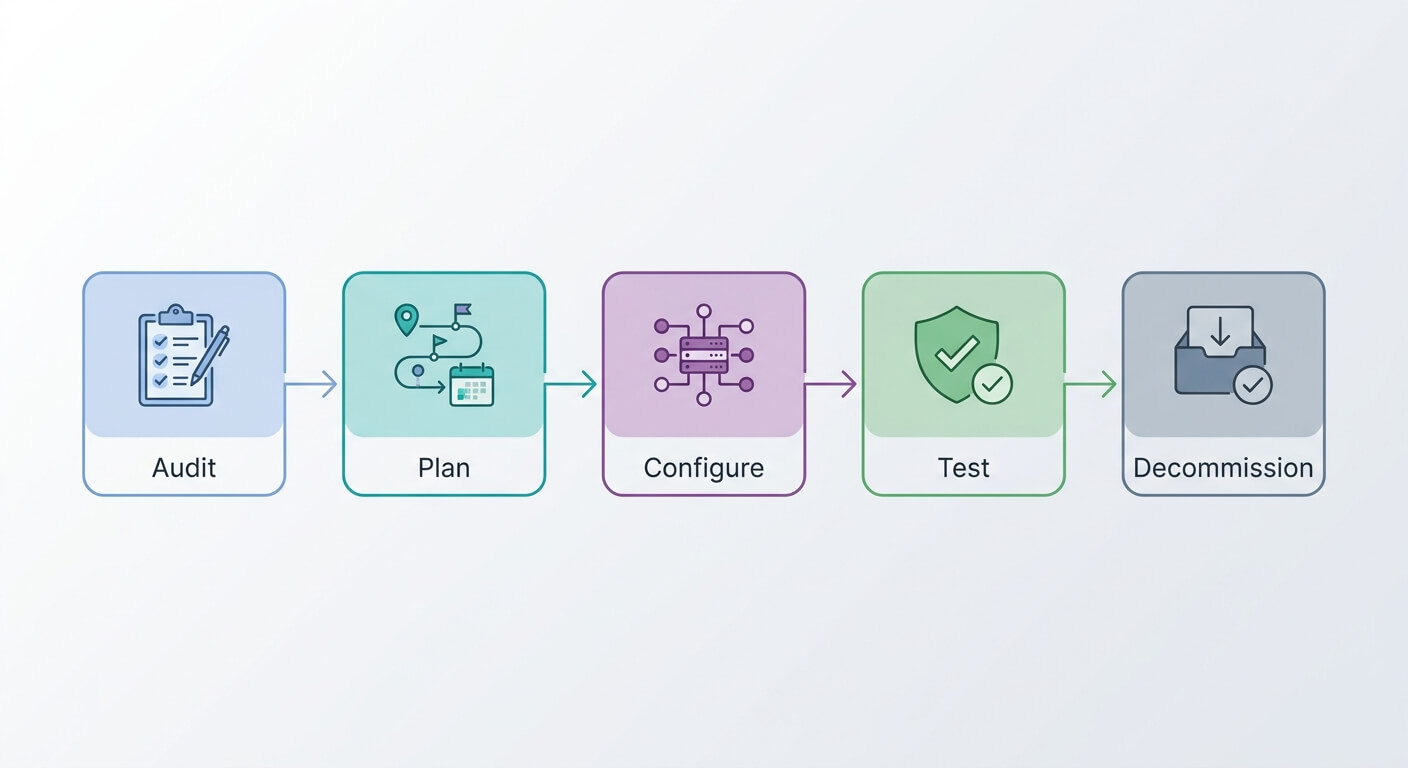
Start with a data audit to understand what personal information you currently hold and how you use it. Many SMBs discover they’re processing more personal data than they realised, creating compliance risks even without AI. This audit forms the foundation for all subsequent AI implementations.
Map your AI use cases against GDPR requirements. Which use cases involve automated decision-making? Which create high privacy risks requiring DPIAs? Which can operate on anonymised or aggregated data? This mapping helps prioritise AI implementations that deliver value while minimising compliance complexity.
Implement privacy by design principles from the start. It’s far easier to build GDPR compliance into AI systems during development than to retrofit it later. This includes selecting AI tools that support privacy controls, designing data flows that minimise personal data exposure, and establishing human oversight processes.
Develop clear policies and procedures for AI governance. Staff need practical guidance about when to seek privacy advice, how to respond to individual rights requests, and what to do when AI systems behave unexpectedly. Generic privacy policies don’t provide sufficient guidance for AI-specific scenarios.
Choosing GDPR-Compliant AI Tools
Not all AI tools are created equal when it comes to GDPR compliance. The tool selection process significantly affects your ability to meet regulatory requirements.
Look for tools that support data subject rights through APIs or administrative interfaces. You should be able to extract, correct, or delete individual records without manual intervention. Tools that embed personal data in opaque models create significant compliance challenges.
Evaluate the vendor’s data protection credentials. Are they certified under recognised privacy frameworks? Do they provide clear documentation about their security measures? Can they support your DPIA requirements with technical specifications and risk assessments?
Consider deployment options carefully. Cloud-based AI services might offer better functionality, but you have less control over data processing. On-premises solutions provide more control but require greater internal expertise. Hybrid approaches can balance these considerations.
Examine the tool’s audit capabilities. GDPR requires you to demonstrate compliance, not just achieve it. AI tools that provide detailed logging of processing activities, decision-making logic, and data access help you evidence compliance to regulators.
Building Compliant AI Workflows
GDPR compliance isn’t just about the AI tools themselves. It’s about how you integrate those tools into your business processes. Process optimisation becomes essential for maintaining compliance while achieving operational efficiency.
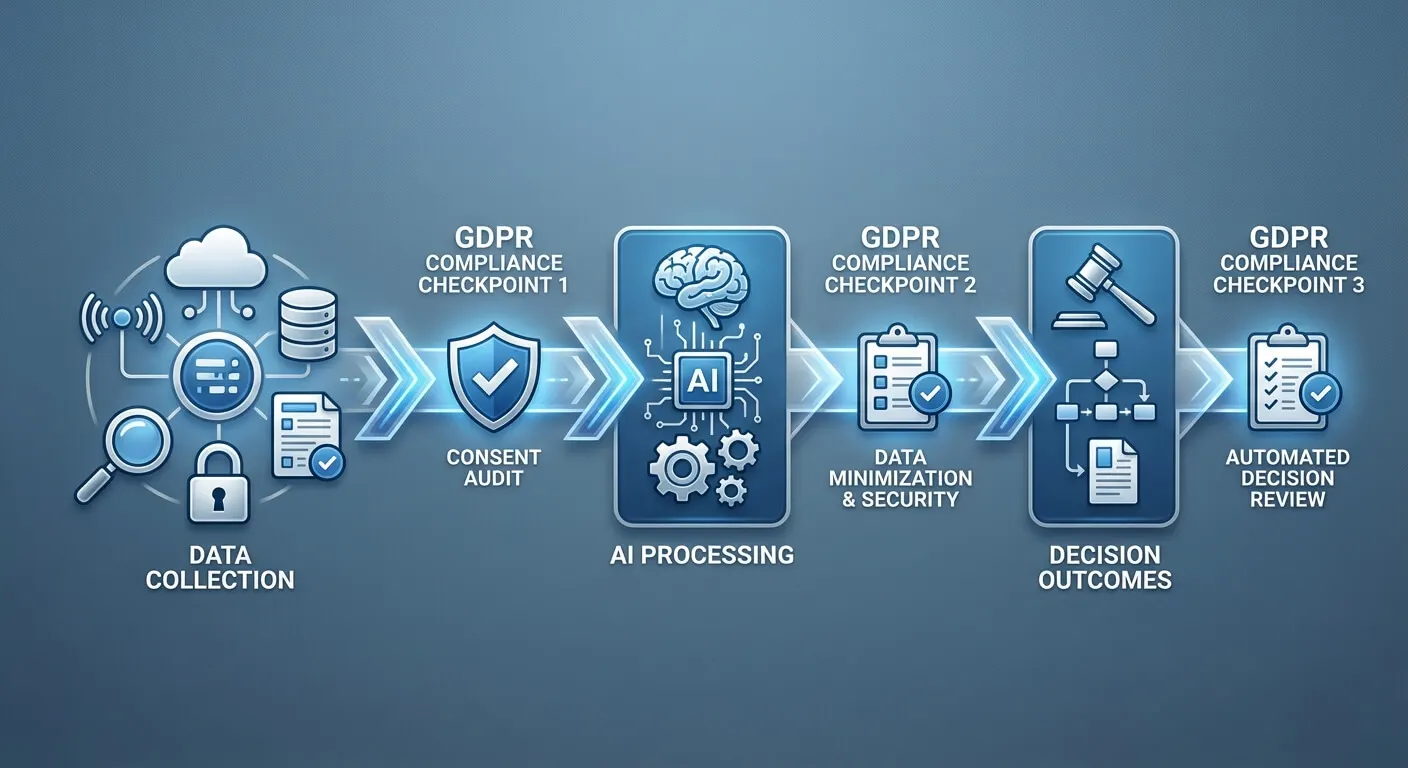
Data flow documentation should trace personal information from collection through AI processing to final outcomes. This documentation helps identify compliance touchpoints and ensures consistent handling across your organisation.
Human oversight mechanisms must be meaningful, not perfunctory. If regulations or your privacy notices promise human review of AI decisions, that review must be capable of changing outcomes. Token human involvement doesn’t satisfy GDPR requirements.
Exception handling procedures should address situations where AI systems cannot comply with individual rights requests or where automated processing creates unexpected privacy risks. Clear escalation paths help ensure timely resolution of compliance issues.
Regular compliance monitoring should include both technical audits of AI systems and process reviews of human activities. Many GDPR violations result from process failures rather than technical problems.
Cost-Benefit Analysis of GDPR-Compliant AI
Financial SMBs often worry that GDPR compliance makes AI adoption prohibitively expensive. In my experience, the opposite is usually true. Proper compliance frameworks actually improve AI outcomes while reducing long-term costs.
Upfront compliance costs include DPIA expenses, additional security measures, and staff training. However, these costs are typically modest compared to the potential fines for non-compliance.
Ongoing operational costs include regular compliance audits, enhanced data security measures, and resources to handle individual rights requests. However, many of these activities improve data quality and system reliability, delivering benefits beyond compliance.
Risk mitigation benefits include reduced regulatory exposure, improved customer trust, and better data governance. Financial services customers increasingly choose providers based on privacy practices. Strong GDPR compliance can become a competitive advantage.
Operational benefits often exceed compliance costs. AI systems built with privacy by design tend to be more efficient, reliable, and maintainable. Data minimisation reduces storage and processing costs. Clear governance procedures reduce operational errors and improve system performance.
Common Compliance Pitfalls and How to Avoid Them
Several patterns of GDPR violations appear repeatedly in financial services AI implementations. Understanding these pitfalls helps you avoid expensive mistakes.
Scope creep occurs when AI systems gradually expand beyond their original purposes without updating privacy notices or legal bases. A fraud detection system might start being used for marketing analysis without proper consent. Regular reviews of AI system usage help identify and correct scope creep.
Vendor over-reliance happens when organisations assume third-party AI providers handle all compliance requirements. GDPR makes you responsible for compliance regardless of which tools you use. Due diligence and ongoing monitoring of vendor practices remain essential.
Data retention failures occur when AI systems continue processing personal data beyond necessary retention periods. Automated data lifecycle management helps ensure data is deleted or anonymised when no longer needed for legitimate purposes.
Insufficient human oversight creates risks when AI systems make decisions that affect individuals without meaningful human involvement. Even when not required by Article 22, human oversight often improves both compliance and business outcomes.
Future-Proofing Your Compliance Approach
GDPR is not static. Regulatory interpretation continues evolving, particularly around AI applications. Building flexibility into your compliance approach helps accommodate future changes without major system overhauls.
Stay informed about regulatory developments through official guidance from the Information Commissioner’s Office and European Data Protection Board. Subscribe to updates and participate in industry forums where practical compliance approaches are discussed.
Implement modular compliance controls that can be adjusted as requirements change. Systems designed with rigid compliance measures often require expensive modifications when regulations evolve.
Maintain detailed documentation of your compliance decisions and their rationale. This documentation helps demonstrate good faith compliance efforts and provides a foundation for adapting to new requirements.
Consider engaging with strategic consulting services that specialise in privacy and AI governance. Research from the European Data Protection Board indicates that organisations using specialist privacy consultants reduced their average GDPR breach costs by 34% compared to those managing compliance entirely in-house. External expertise can help identify compliance gaps and implement best practices that protect your business while enabling innovation.
GDPR compliance for AI-enabled financial services requires ongoing attention, but it doesn’t have to prevent innovation. With proper planning and implementation, you can achieve both regulatory compliance and operational efficiency. The businesses that start building compliant AI capabilities now will have significant advantages as the technology becomes increasingly central to financial services operations.
Frequently Asked Questions
What is the maximum fine for GDPR non-compliance when using AI tools in financial services?
GDPR violations can result in fines up to €20 million or 4% of annual global turnover, whichever is higher. For financial SMBs using AI tools, the Information Commissioner’s Office considers the severity of the violation, whether it was intentional or negligent, and what steps you took to mitigate harm. Implementing proper compliance frameworks, conducting DPIAs, and demonstrating good faith efforts to comply can significantly reduce potential penalties even if violations occur.
Do I need consent from customers to use AI for fraud detection on their accounts?
Not necessarily. Fraud detection typically falls under the legal basis of legitimate interest or contractual necessity rather than requiring explicit consent. You have a legitimate interest in protecting both your business and customers from fraudulent activity. However, you must still inform customers about AI-powered fraud detection in your privacy notices, implement appropriate safeguards, and allow customers to object if the processing isn’t essential to providing the service. Anti-money laundering checks may also create a legal obligation that justifies AI processing without consent.
How do I handle a customer’s right to erasure when their data has been used to train an AI model?
This is one of the most challenging aspects of GDPR compliance for AI systems. When a customer requests erasure, you must remove their personal data from active databases and systems. For data embedded in trained AI models, you have several options: retrain the model periodically without the deleted individuals’ data, use machine unlearning techniques to remove specific data influences, or document why erasure is technically impossible and implement alternative protections. Many financial SMBs schedule quarterly model retraining cycles that incorporate erasure requests, balancing compliance obligations with operational practicality.
Can I use publicly available data to train AI models without worrying about GDPR?
No. GDPR applies to all personal data processing regardless of the source. Just because data is publicly available doesn’t mean you can process it for any purpose without consideration of GDPR requirements. You still need a lawful basis for processing, must respect purpose limitation principles, and cannot use publicly available data in ways that would surprise or harm individuals. For example, scraping publicly available social media data to make credit decisions would likely violate GDPR even though the data was publicly accessible, because individuals wouldn’t reasonably expect that use of their information.
How often should I conduct Data Protection Impact Assessments for my AI systems?
You must conduct a DPIA before implementing any AI system that creates high privacy risks. However, DPIAs aren’t one-time exercises. You should review and update your DPIA whenever you make significant changes to the AI system, expand its purposes, process new categories of data, or when regulatory guidance evolves. Many financial SMBs conduct annual DPIA reviews for operational AI systems and trigger additional reviews when making material changes. Regular reviews help identify compliance drift where systems gradually diverge from their original approved purposes and safeguards.
How can AI actually help financial SMBs with GDPR compliance?
Properly implemented AI tools can significantly strengthen GDPR compliance. They assist with data minimisation by identifying essential data, ensure purpose limitation by flagging inappropriate use, and improve accuracy by maintaining up-to-date records. AI also helps with storage limitation by automatically identifying data that has exceeded retention periods, streamlining responsible data management.
Why is data accuracy critical for financial AI systems?
Accuracy is paramount because AI systems in finance often make automated decisions about crucial services like loans, insurance, or financial products. Inaccurate data can lead to unfair or incorrect outcomes for customers, potentially causing significant financial detriment. Financial institutions must maintain precise, up-to-date customer information and provide clear mechanisms for individuals to correct any inaccuracies.
When should a financial SMB use ‘consent’ as a legal basis for AI data processing?
Financial SMBs should use consent for optional services where customers have a genuine choice, such as financial planning tools or budgeting apps. Consent must be freely given, specific, informed, and easily withdrawable. If a customer withdraws consent, your AI systems must immediately cease processing their data for that specific purpose, ensuring compliance.
What does ‘purpose limitation’ mean for financial businesses using AI?
Purpose limitation dictates that financial businesses must only use personal data for the specific purposes communicated to customers. For AI, this means if data is collected for credit risk assessment, it cannot be repurposed for marketing campaigns without obtaining explicit new consent.