Building Your AI Roadmap: What to Automate First and Why
Learn how to build an effective AI automation roadmap for your small business. Discover what to automate first, implementation strategies, and ROI measurement.
Contents
The AI roadmap question is not which technology to adopt first. It’s which mundane, repetitive task already consumes your day. Business owners get paralysed by choice because they’re looking at the wrong list, features instead of time drains.
Building an effective AI roadmap requires strategic thinking, not technological enthusiasm. You need to identify which processes drain your time without adding real value to your customers. This isn’t about replacing humans with machines; it’s about freeing your team from administrative burden so they can focus on what matters.
Understanding Your Current State
Before you automate anything, you need to understand what’s actually happening in your business. Most small business owners operate on instinct, knowing something takes too long without measuring exactly how long. This knowledge gap makes it impossible to prioritise effectively.
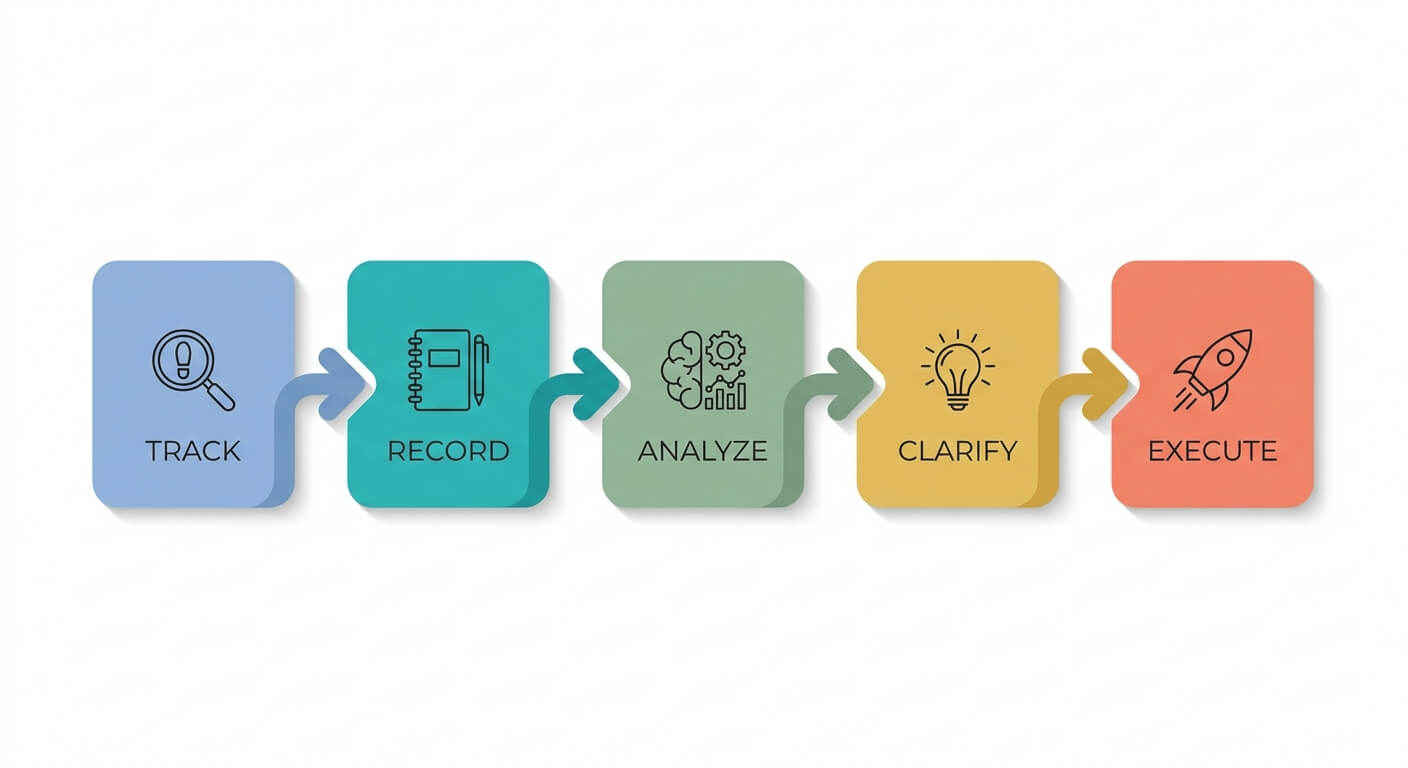
Start by documenting your current processes, particularly those involving data entry, customer communications, and routine decision-making. Track how much time your team spends on each task over a typical week. The results often surprise business owners. What feels like a quick five-minute job frequently takes twenty minutes when you include interruptions, system switching, and mental context changes.
Research has found that knowledge workers spend a notable portion of their time on repetitive tasks that could be automated. For small businesses, this percentage is often higher because they lack the systems larger companies use to streamline operations. When your accountant spends three hours weekly transferring data between systems, or your customer service team manually updates order statuses, these aren’t isolated inefficiencies. They’re systematic problems that compound over time.
The documentation process itself reveals automation opportunities. Tasks requiring the same steps every time, decisions based on clear criteria, and processes involving multiple system interactions are prime candidates. Don’t worry about technical feasibility yet. Focus on understanding your current reality before exploring solutions.
Identifying High-Impact Automation Opportunities
Not all automation delivers equal value. The best opportunities combine high frequency with significant time investment. A task you perform once monthly might take an hour, but automating a fifteen-minute daily task saves more time over the year.
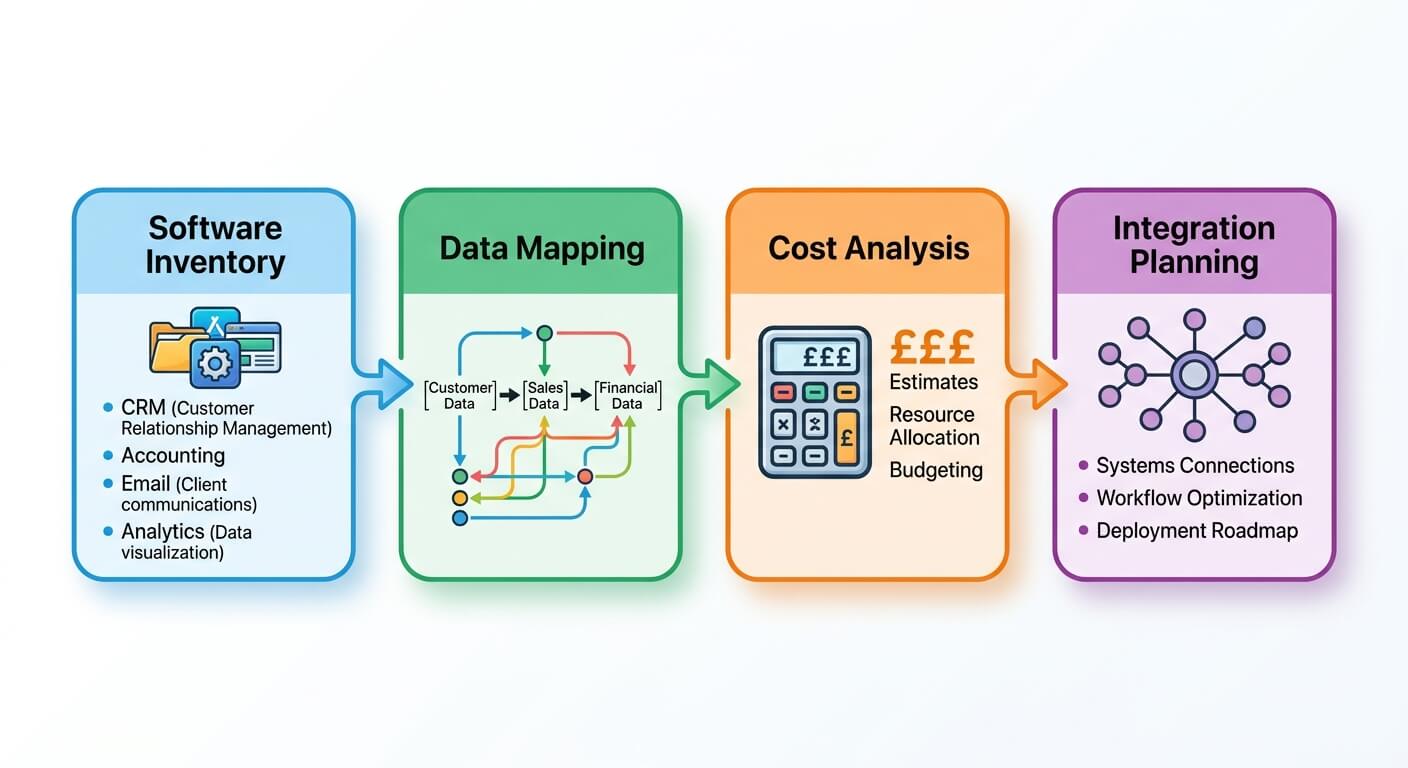
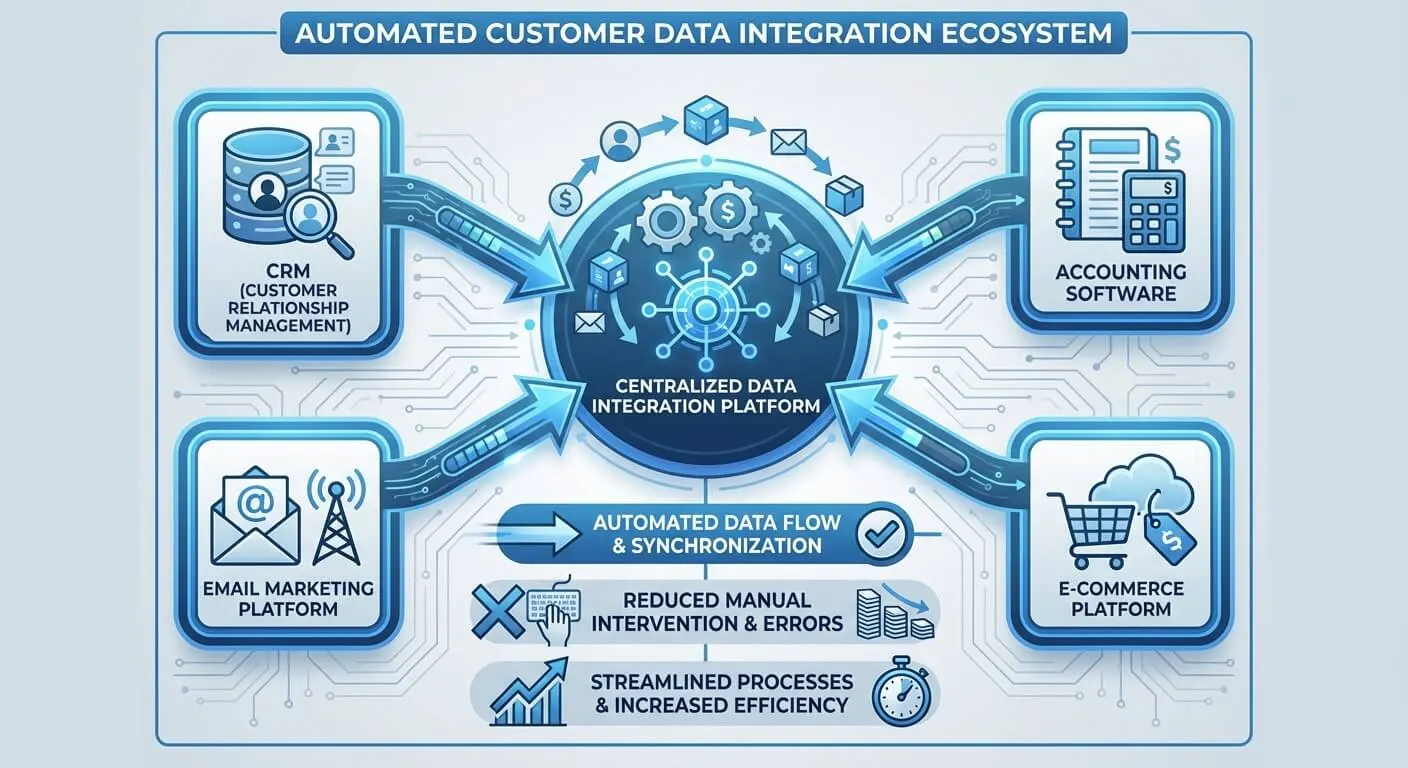
Customer data management represents the highest-impact opportunity for most small businesses. Your customer information flows through multiple systems: your website captures leads, your CRM stores contact details, your accounting software tracks payments, and your marketing platform manages communications. When these systems don’t communicate, your team manually bridges the gaps.
Consider the typical customer journey after someone purchases from your website. Someone needs to update your CRM with purchase details, add the customer to your email marketing list, create an invoice in your accounting system, and update inventory levels. Each step involves switching systems, finding the right records, and entering information. This process might take fifteen minutes per order. With fifty orders weekly, you’re spending over twelve hours monthly on data entry.
Businesses that invest in system integration win back time from the people who currently move data between systems by hand. Those hours don’t disappear; they shift to customer-facing activities that generate revenue. Measure your own before and after rather than trusting a headline figure.
Financial processes offer another high-impact area. Invoice generation, payment processing, expense categorisation, and financial reporting involve significant manual effort. When your bookkeeper manually matches bank transactions to invoices, categorises expenses based on merchant names, and generates monthly reports by pulling data from various sources, they’re performing tasks that software can handle more accurately.
The key is identifying processes where human judgment adds little value. Categorising a transaction from your office supplies vendor doesn’t require insight; it requires consistency. Sending payment reminders to customers with overdue invoices follows predictable rules. These are perfect automation candidates.
Data-Driven Tasks: Your Starting Point
Data-driven tasks should be your first automation priority because they deliver measurable results with minimal risk. These processes involve moving information between systems, updating records based on triggers, and generating reports from existing data.
Inventory management exemplifies high-value data automation. Small retailers often manage stock levels manually, checking supplier websites, updating spreadsheets, and creating purchase orders based on gut feeling. This approach works until it doesn’t. Stockouts lose sales, while excess inventory ties up cash flow.
Automated inventory management connects your sales data with supplier systems, tracking stock levels in real-time and generating purchase orders when levels drop below predetermined thresholds. The system considers seasonal trends, lead times, and minimum order quantities. What previously required hours of manual analysis happens automatically.
Customer communication represents another excellent starting point. When someone places an order, abandons their shopping cart, or requests support, your response follows predictable patterns. Automated email sequences can acknowledge orders, provide shipping updates, request reviews, and nurture leads based on their behaviour.
The beauty of data-driven automation lies in its measurability. You can track exactly how much time you save, how accuracy improves, and where problems occur. This creates a foundation for more complex automation projects while demonstrating clear value to your team.
Customer Communication Automation
Customer communication automation transforms how small businesses maintain relationships at scale. Every customer interaction doesn’t require human involvement, but every customer deserves timely, relevant communication. The challenge is determining which communications to automate without losing the personal touch that differentiates small businesses.
Start with transactional communications: order confirmations, shipping notifications, payment receipts, and appointment reminders. These messages provide essential information customers expect to receive quickly. Delays frustrate customers and generate unnecessary support requests. Automating these communications ensures consistency while freeing your team for more complex interactions.
Lead nurturing offers significant automation potential. When someone downloads a resource from your website or requests information, they enter a predictable journey. They need educational content that addresses their concerns, social proof that builds confidence, and clear next steps that guide their decision-making. Marketing automation systems can deliver this journey automatically, adapting based on how leads interact with your content.
Customer support represents a more nuanced automation opportunity. While complex issues require human intervention, many support requests involve routine questions about order status, return policies, or account management. Chatbots can handle these queries instantly, providing accurate information while escalating complex issues to human agents.
The key to successful communication automation is maintaining your brand voice while providing genuine value. Generic, robotic messages damage relationships rather than strengthen them. Your automated communications should sound like your team wrote them, addressing specific customer needs with appropriate personality and tone.
Financial Process Automation
Financial processes consume disproportionate time in small businesses while offering substantial automation opportunities. These processes involve predictable rules, standard formats, and clear criteria, making them ideal for automated handling.
Invoicing represents the most obvious opportunity. When you complete a project or fulfil an order, generating an invoice follows a standard process: gather project details, apply appropriate rates or prices, add applicable taxes, and send to the customer. This process can be automated based on project completion triggers, recurring billing schedules, or inventory movements.
Expense management offers another high-value opportunity. Rather than manually categorising transactions and matching receipts to expenses, automated systems can analyse transaction data, categorise expenses based on merchant information, and extract key details from receipt photos. Research indicates that automated expense processing reduces processing time while improving accuracy.
Cash flow management becomes more strategic with automation. Rather than manually tracking which customers pay on time, automated systems can monitor payment patterns, send reminder sequences for overdue invoices, and flag potential collection issues before they become problems. This proactive approach improves cash flow while maintaining customer relationships.
Financial reporting transforms from a time-consuming monthly exercise to an automated dashboard that provides real-time insights. When your financial data flows automatically between systems, generating profit and loss statements, cash flow reports, and budget comparisons becomes effortless. Your accountant can focus on analysis rather than data compilation.
Operational Workflow Enhancement
Operational workflows represent the backbone of your business, but many small businesses rely on informal processes that depend heavily on individual knowledge and manual coordination. Automating these workflows creates consistency, reduces errors, and scales with your business growth.
Project management workflows exemplify this opportunity. When you win new business, multiple teams need coordination: sales hands over customer requirements, project managers create schedules, procurement sources materials, and finance sets up billing. Without automated workflows, this coordination happens through email threads, verbal updates, and shared documents that quickly become outdated.
Automated project workflows can trigger each step based on previous completions. When sales marks a deal as closed, the system automatically creates a project record, assigns team members based on skills and availability, generates initial schedules, and notifies relevant stakeholders. What previously required multiple meetings and email exchanges happens seamlessly.
Supplier management offers substantial automation potential. Rather than manually monitoring supplier performance, tracking delivery schedules, and managing contracts, automated systems can evaluate suppliers based on defined criteria, flag potential issues before they impact operations, and maintain up-to-date supplier information across your organisation.
Quality control processes benefit significantly from automation. Whether you’re manufacturing products, delivering services, or managing facilities, quality checks follow predictable patterns. Automated systems can schedule inspections, track compliance metrics, and escalate issues based on severity criteria. This ensures consistent quality while documenting compliance requirements.
The goal isn’t eliminating human judgment from operational workflows, but rather ensuring that human attention focuses on decisions that actually require insight and experience. When routine coordination happens automatically, your team can concentrate on strategic thinking and problem-solving.
Technology Selection Strategy

Selecting the right technology represents a critical decision point that determines your automation success. The market offers countless solutions, from simple workflow tools to comprehensive enterprise platforms. The challenge is matching technology capabilities with your specific needs without over-engineering simple problems.
Start with your existing technology stack. Many businesses already own software with automation capabilities they haven’t explored. Your accounting software might include automated invoicing features, your CRM could support email sequences, and your website platform may offer integration options. Before purchasing new tools, maximise your current investments.
Integration capabilities should drive technology selection more than individual features. A system that connects seamlessly with your existing tools delivers more value than a feature-rich platform that operates in isolation. When evaluating options, prioritise solutions that offer robust APIs, pre-built integrations, and clear data export capabilities.
Scalability considerations become crucial as your automation sophistication increases. Simple workflow tools work well for basic automation but may limit future capabilities. However, enterprise platforms might overwhelm small teams with unnecessary complexity. The key is selecting tools that match your current needs while supporting reasonable growth expectations.
Strategic consulting becomes valuable when technology selection feels overwhelming. Rather than choosing based on marketing claims or feature comparisons, experienced consultants can assess your specific situation, recommend appropriate solutions, and create implementation roadmaps that minimise disruption while maximising value.
Implementation Methodology
Successful automation implementation requires methodical planning rather than enthusiastic experimentation. Many businesses fail because they attempt too much simultaneously, underestimate change management requirements, or lack clear success metrics. A structured approach increases success probability while minimising operational disruption.
Begin with pilot projects that deliver quick wins while building team confidence. Rather than automating your most complex process first, start with straightforward data transfers or simple communication sequences. Success with these projects creates momentum for more ambitious initiatives while providing learning opportunities in low-risk situations.
Change management deserves equal attention with technical implementation. Your team needs training, support, and clear communication about how automation changes their roles. Emphasise that automation eliminates tedious tasks rather than replacing people. When team members understand that automation frees them for more engaging work, resistance typically transforms into enthusiasm.
Testing protocols become critical as automation complexity increases. Simple automations might work perfectly from day one, but sophisticated workflows require extensive testing before full deployment. Create test scenarios that cover normal operations, edge cases, and error conditions. Document expected behaviours and verify that automated processes handle exceptions appropriately.
Monitoring and maintenance planning often receives insufficient attention during implementation planning. Automated processes require ongoing oversight to ensure they continue working as intended. Customer information changes, business rules evolve, and external systems update their requirements. Build monitoring capabilities that alert you when processes fail or produce unexpected results.
Measuring Success and ROI
Measuring automation success requires establishing baseline metrics before implementation and tracking improvements over time. Many businesses implement automation without clear success criteria, making it impossible to justify continued investment or identify optimisation opportunities.
Time savings represent the most obvious metric but require careful measurement. Track not just the time eliminated from specific tasks, but also the ripple effects throughout your organisation. When automated data entry eliminates manual reconciliation work, the total time savings exceed the original task duration. When automated customer communications reduce support requests, the benefits compound across multiple team members.
Accuracy improvements often deliver more value than time savings. Manual processes inevitably include errors that create downstream problems: incorrect inventory levels cause stockouts, data entry mistakes generate customer service issues, and financial errors require time-consuming corrections. Automation typically improves accuracy while reducing the hidden costs of error correction.
Customer satisfaction metrics provide insight into automation’s external impact. Faster response times, consistent communication, and improved accuracy enhance customer experience in measurable ways. Track customer satisfaction scores, response time improvements, and complaint reduction to understand how internal automation benefits your customers.
Employee satisfaction deserves measurement alongside operational metrics. When automation eliminates frustrating, repetitive tasks, job satisfaction typically improves. Team members can focus on strategic work, customer relationships, and creative problem-solving rather than data entry and routine administration. Monitor employee feedback, retention rates, and engagement scores to understand automation’s human impact.
Financial ROI calculations should include both direct savings and opportunity costs. Direct savings include labour hours, error correction time, and system efficiency improvements. Opportunity costs represent the revenue generation possible when team members focus on customer-facing activities rather than administrative tasks. A sales person spending four fewer hours weekly on data entry can invest that time in prospect development and customer relationship building.
Building Long-Term Capabilities
Automation success creates opportunities for increasingly sophisticated implementations. As your team develops automation expertise and your processes mature, you can tackle more complex challenges that deliver greater value. Building these capabilities requires strategic thinking about skills development, technology evolution, and organisational change.
Data quality becomes increasingly important as automation sophistication increases. Simple automations can work with imperfect data, but advanced analytics and decision-making require clean, consistent information. Invest in data quality improvement as your automation foundation strengthens. Process optimisation initiatives should include data standardisation, validation rules, and quality monitoring.
Internal expertise development determines your long-term automation success. While external consultants can accelerate initial implementations, your team needs sufficient knowledge to maintain systems, identify new opportunities, and troubleshoot problems. Balance external expertise with internal capability building to create sustainable automation programs.
Technology roadmap planning ensures that current automation decisions support future capabilities rather than limiting options. Consider how your chosen tools integrate with emerging technologies, whether your data architecture supports advanced analytics, and how your processes can evolve as business requirements change.
Automation maturity typically progresses through predictable stages: basic data transfers, workflow automation, predictive analytics, and intelligent decision-making. Understanding this progression helps prioritise investments and set realistic expectations. Each stage builds upon previous capabilities while enabling more sophisticated applications.
Your automation roadmap should balance immediate value delivery with long-term capability building. Quick wins maintain momentum and justify continued investment, while strategic initiatives position your business for future opportunities. The goal is creating a systematic approach to operational excellence that scales with your business growth while maintaining the personal service that differentiates small businesses from larger competitors.
Building an AI roadmap isn’t about adopting the latest technology or automating everything possible. It’s about strategically eliminating the administrative burden that prevents you from focusing on customers, innovation, and growth. Start with data-driven tasks, measure results carefully, and build capabilities methodically. Your future self will appreciate the time you invested in creating systems that work for you rather than requiring constant attention from you.
Frequently Asked Questions
What processes should I automate first in my small business?
Start with data-driven tasks that involve repetitive data entry, system-to-system transfers, and routine communications. Customer data management, invoicing, and transactional emails represent ideal first projects because they deliver measurable time savings with minimal risk. Focus on processes where human judgment adds little value but consume significant time. Document your current workflows before selecting automation candidates to identify the highest-impact opportunities.
How long does it take to see ROI from business automation?
Most small businesses see measurable ROI within 3-6 months for straightforward automation projects like data transfers and email sequences. More complex implementations involving multiple systems may require 6-12 months to deliver full value. The key is starting with pilot projects that demonstrate quick wins whilst building team confidence. Track both direct time savings and indirect benefits like improved accuracy and customer satisfaction to calculate comprehensive ROI.
Do I need technical expertise to implement automation in my business?
Whilst technical knowledge helps, modern automation tools are designed for business users rather than programmers. Many platforms offer visual workflow builders, pre-built integrations, and templates that require minimal coding. Start with your existing software’s automation features before investing in new tools. For complex implementations, strategic consulting can accelerate success whilst building your internal capabilities. Focus on understanding your processes thoroughly; technology selection becomes easier with clear requirements.
How do I convince my team to embrace automation rather than resist it?
Frame automation as eliminating tedious tasks rather than replacing people. Involve team members in identifying automation opportunities by asking which aspects of their work feel most repetitive or frustrating. Emphasise that automation frees them for strategic work, customer relationships, and creative problem-solving. Start with pilot projects that deliver obvious benefits, share success metrics openly, and provide comprehensive training. When employees experience firsthand how automation improves their daily work, resistance typically transforms into enthusiasm.
What’s the difference between simple workflow automation and AI-powered automation?
Simple workflow automation follows predetermined rules: when X happens, do Y. These rule-based systems handle predictable processes excellently but cannot adapt to new situations. AI-powered automation incorporates machine learning to recognise patterns, make predictions, and improve performance over time. For most small businesses, rule-based automation delivers substantial value before AI capabilities become necessary. Start with straightforward workflows, measure results, and consider AI-powered solutions as your automation sophistication increases and business complexity demands adaptive systems.