Email Automation Sequences That Actually Convert SMB Leads
Build email automation sequences that convert SMB leads. Fix the five mistakes killing your results, with templates you can use today.
Contents
Email automation sequences convert SMB leads by matching the message to the buyer’s stage, not the calendar. The best sequences are short, personal, and tied to one clear action. Map your sales process first, write emails that move someone one step closer to a decision, and review performance monthly. Generic newsletters rarely convert. Timed, relevant sequences built around real buyer decisions consistently do.
Most small business email sequences get ignored. Not because email is dead, but because the sequences are built backwards. They blast generic offers at people who barely remember signing up.
I see this constantly. Owners set up a welcome email, maybe two follow-ups, then wonder why nobody buys. The problem is rarely the tool. It is the strategy behind it.
This guide breaks down how to build email automation sequences that actually convert SMB leads. I’ll go through the most common mistakes, then show you exactly what to do instead, with templates you can copy.
Getting this right matters because email still delivers some of the best returns of any marketing channel. Email still converts better than social for direct customer engagement, but only when the sequence respects how people actually buy.

Mistake 1: Automating a Process You Have Never Mapped
A lead nurture sequence is a series of automated emails triggered by a prospect’s action or stage in your funnel. The single biggest reason these fail is that owners automate before they understand their own sales process. In my experience, mapping the process first often reveals the real problem was never the email at all.
Many businesses build elaborate sequences on top of a broken funnel. The result is faster chaos, not more sales.
What to do instead
Before you write a single email, sketch your buyer’s journey. Where do leads come from? What questions do they ask before buying? What stops them?
Write down the three or four real moments where a prospect makes a decision. Your sequence should speak to those exact moments. Nothing else.
This is the same discipline I apply to any automation project. Get the process mapping right and the email almost writes itself. Skip it, and no clever subject line will save you.
Mistake 2: Sending the Same Message to Everyone
Segmentation is the practice of grouping leads by behaviour, source, or interest so each group receives relevant emails. Sending one identical sequence to every contact is the fastest way to train people to ignore you. A lead who downloaded a pricing guide is far ahead of someone who grabbed a free checklist.
Treating them identically wastes both their attention and your sequence.
What to do instead
Start with two or three simple segments. You do not need fifty. A practical starting split is by source: website enquiry, lead magnet download, and referral.
Each group gets a slightly different opening. The website enquiry already knows what you sell, so move quicker. The lead magnet download needs more warming up before you make an offer.

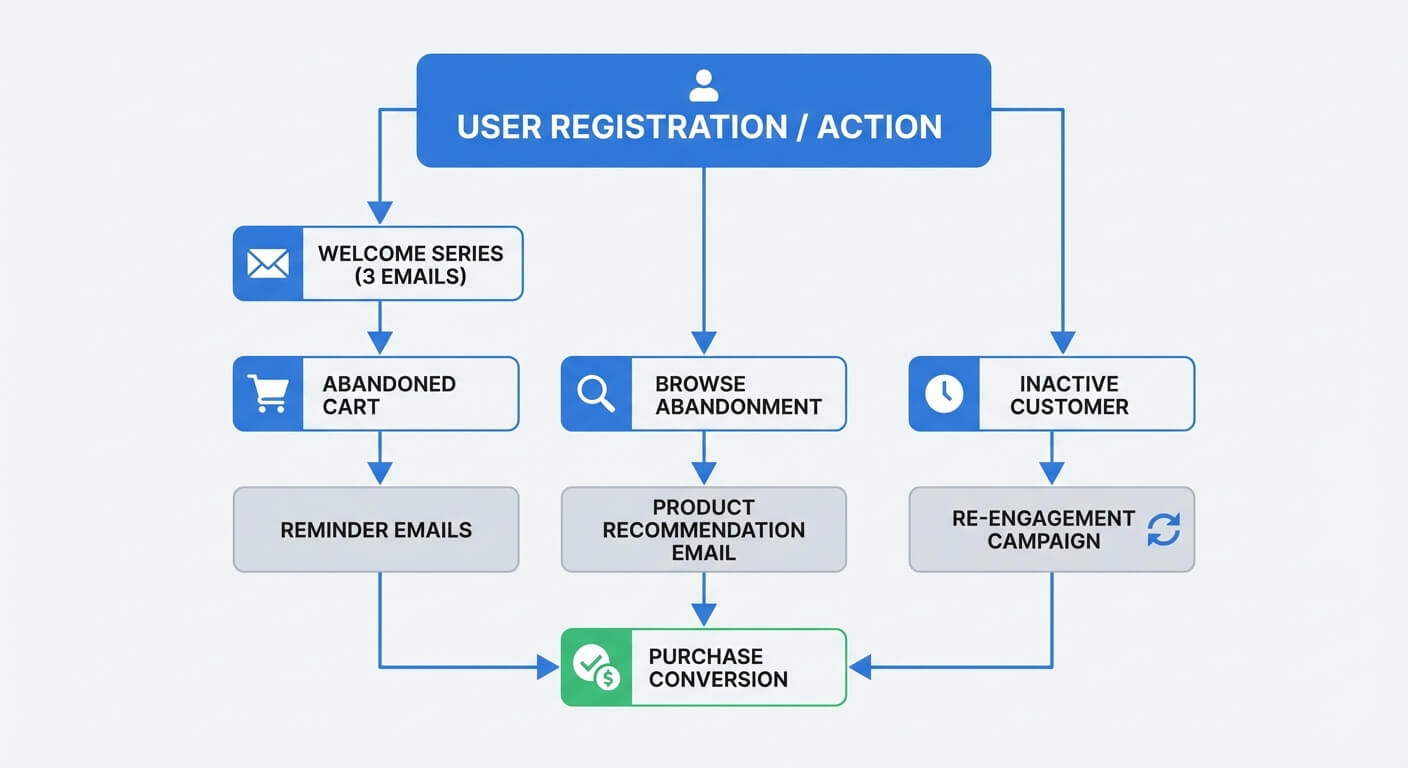
You can layer in behaviour later. If someone clicks a case study link, that signals stronger interest. Tag them and shift them to a more direct sequence. This is the foundation of smarter lead scoring, where you stop chasing cold prospects and focus your energy on warm ones.
Mistake 3: Writing for the Sale, Not the Reader
The best converting emails are short, genuinely useful, and written like a message from a real person. Brevity and clarity beat lengthy persuasion copy in professional contexts every time. A wall of marketing copy gets deleted within seconds.
Your reader is busy. Respect that, and they will reward you with attention.
What to do instead
Keep each email focused on one idea and one action. Lead with value, not your pitch. Answer a question, solve a small problem, or share a quick result from client work.
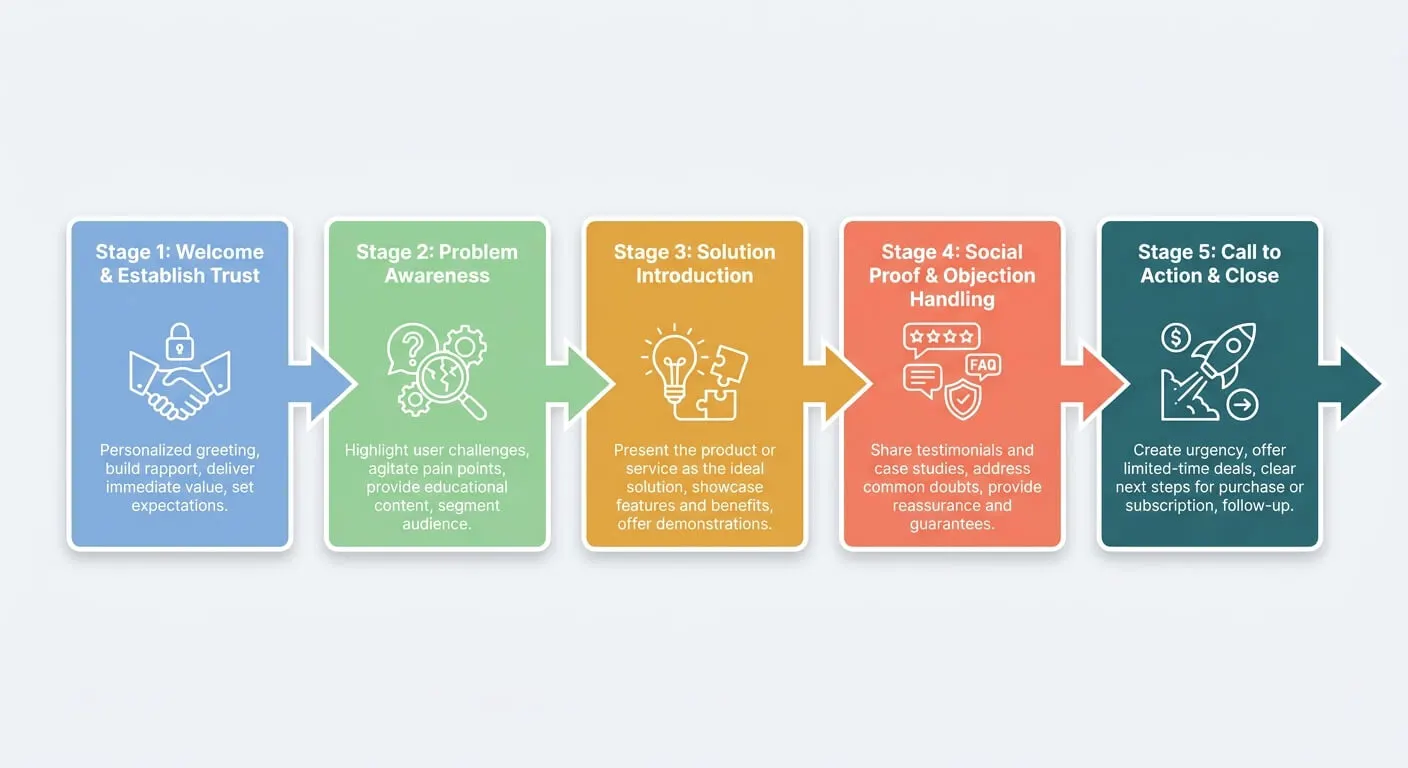
Here is a simple five-email structure that works for most service businesses:
- Email 1 (immediate): Welcome, deliver what they asked for, set expectations.
- Email 2 (day 2): Address the single biggest objection or worry.
- Email 3 (day 4): Share a short proof point, such as a client result or case study.
- Email 4 (day 7): Make one clear offer with a single call to action.
- Email 5 (day 10): A soft final nudge, then move them to your regular list.
Write each one as if you were emailing a single person. Use their first name and plain language. AI can help draft these in your own voice, but you should always control what actually gets sent.
Mistake 4: Setting It and Forgetting It
Email sequences need monitoring, not just launching. Open rates, click rates, and replies tell you what is working. A sequence that performed well last year can quietly decay as your audience and offers change. Treating automation as a one-time job is how solid sequences slowly stop producing results.
Revise your builds when the data disagrees with your assumptions. Your sequences deserve the same honesty.
What to do instead
Check your numbers monthly. Look at which email earns the most opens and which gets skipped. If email three consistently underperforms, rewrite it before touching anything else.
Test one variable at a time. Change a subject line, wait two weeks, then compare results. Steady, small improvements beat a full rebuild every time.

Watch your reply rate as well, not just clicks. Replies are valuable signals. They mean a genuine conversation has started, which is where most SMB sales actually close. Conversation-driven outreach outperforms passive broadcast in complex sales, which is why a reply is worth more to you than a click.
Mistake 5: Choosing the Wrong Tool for Your Stage
Your automation platform should match your current size and budget, not your long-term ambition. Zapier is straightforward to start with, but its per-task pricing can become costly as volume grows. n8n has a steeper learning curve, yet it provides control, room to scale, and the option to self-host your workflows. The right choice depends entirely on where you are now.
Subscription sprawl is a genuine cost. Many small businesses pay for tools they barely use month to month.
What to do instead
If you are just starting out, a dedicated email platform with built-in automation handles the basics well. Mailchimp, ActiveCampaign, or HubSpot all manage simple sequences without complexity.
As you grow and connect more systems together, a workflow tool like n8n gives you one system to learn and far greater flexibility. You retain ownership of the logic and the data.
The trade-off is genuine. Self-hosting swaps recurring subscription fees for ongoing maintenance responsibility. For a fuller comparison of platforms, see my guide to the best workflow automation tools.
Do not pick the most powerful tool available. Pick the one you will actually use this quarter.
Putting It Together
The businesses that succeed with email automation are not the ones with the most sophisticated technology. They are the ones who mapped their process carefully, segmented their leads thoughtfully, and wrote their emails like humans talking to other humans.
Start small. Build one five-email sequence for your strongest lead source. Review the numbers after a month, then improve one element at a time.
Effective email automation sequences are built on relevance, timing, and a human touch. The tools matter far less than the thinking behind them. Get the strategy right, keep a person in the loop, and email becomes one of your most cost-effective sources of consistent new business.
Frequently Asked Questions
How many emails should a lead nurture sequence have?
Most SMB sequences work best with four to six emails spread over one to two weeks. Fewer than four rarely builds enough trust. More than seven often feels intrusive. Start with five, focus each on a single idea, and adjust based on your open and reply rates over time.
How long should I wait between automated emails?
Space emails one to three days apart early in the sequence, then extend the gaps later on. The first email should send immediately after sign-up while interest is at its peak. After that, give people room to read and act before the next message arrives. Watch your unsubscribe rate closely; if it rises, slow the cadence down.
Should I use AI to write my email sequences?
AI is effective for drafting and refining emails at speed, particularly when working in your own voice and tone. However, you should always review and approve what gets sent to real contacts. A person should read every message before a customer does. Use AI to handle the heavy lifting, then apply the judgement and personal context that only you can bring.
What converts better, automated sequences or one-off emails?
Well-built sequences typically convert better because they reach leads at the right moment, not simply when you happen to press send. A single broadcast reaches everyone simultaneously, regardless of where they are in their decision. A sequence follows each lead through their own buying process, which is why it tends to earn more replies and generate more sales over time.